What To Do In The Old Souk In Dubai?
The Old Souk in Dubai is free to walk and browse. Here is what you can do there, which souks cost nothing to enter, how to cross the Creek, and which free walking tours cover the area.
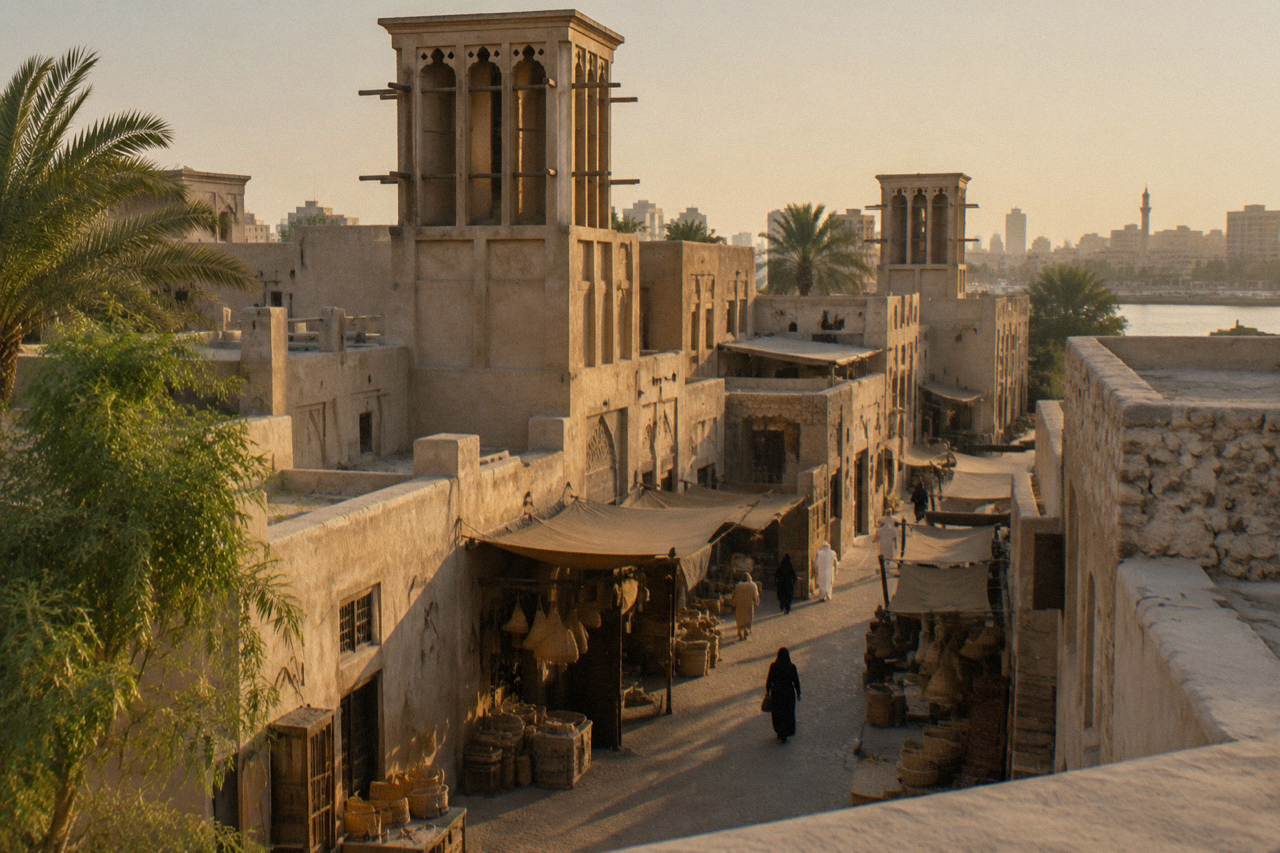
The Old Souk district is the cluster of traditional marketplaces around Dubai Creek where the city's trading history is still visibly at work. Walking into it and browsing costs nothing. The souks themselves, the historic Al Fahidi neighbourhood on the Bur Dubai side, and the creekside streets between them are all free to enter, and thirteen free walking tours run in Old Dubai and Downtown, listed on GuruWalk and freetour.com, if you want a guide alongside you.
What trips visitors up is not the entry cost, because there is none. It is the mix of free and paid inside a single district: the souks are free to browse but shopping is a paid purchase, the abra crossing over the Creek costs AED 2 per commuter trip, and the museums in the surrounding streets each carry their own rule. This page separates those layers so you can plan a visit around what is genuinely free.
What To Do In The Old Souk In Dubai?
In the Old Souk you can walk the covered marketplace lanes, browse the gold, spice and textile souks at no charge, look at the historic wind tower architecture of the Al Fahidi Historical Neighbourhood nearby, and cross Dubai Creek on the AED 2 abra. Walking it all is free; the enclosed museums and tickets are not, and the whole district is compact enough to cover on foot in a single visit.
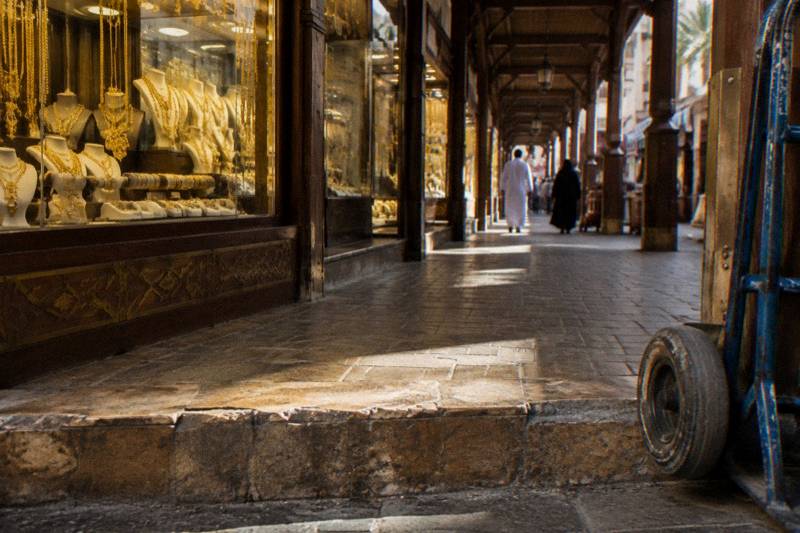
The core activity is the walk itself. The Textile Souk in Bur Dubai sits at the heart of what most visitors mean by "the Old Souk", a marketplace of fabric shops and trading stalls that costs nothing to enter and browse. From there the district spreads towards the Creek in one direction and the Al Fahidi Historical Neighbourhood in the other, and every one of those streets is free to walk.
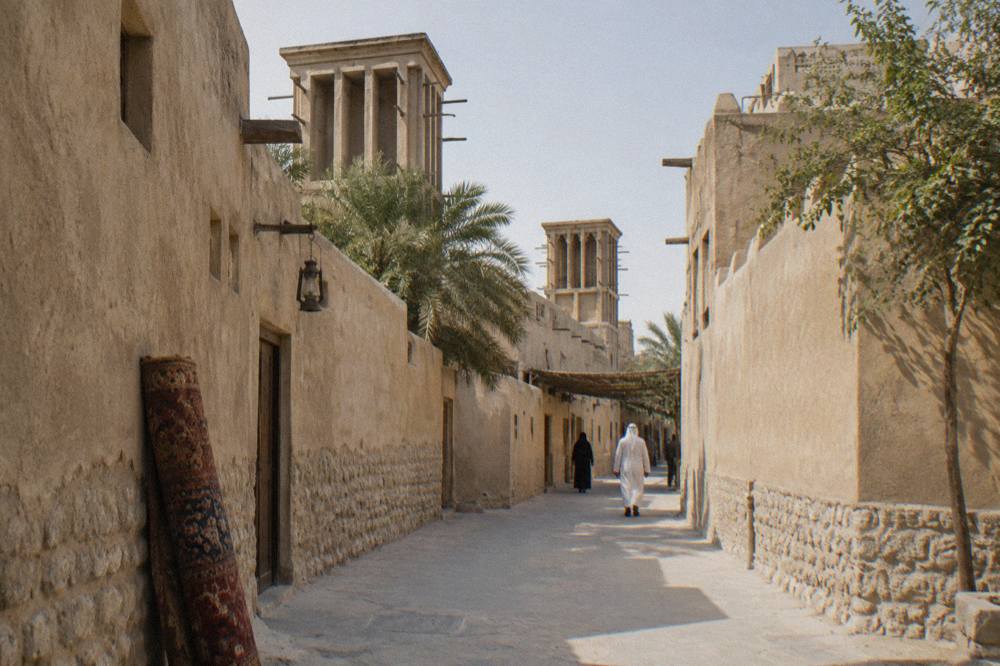
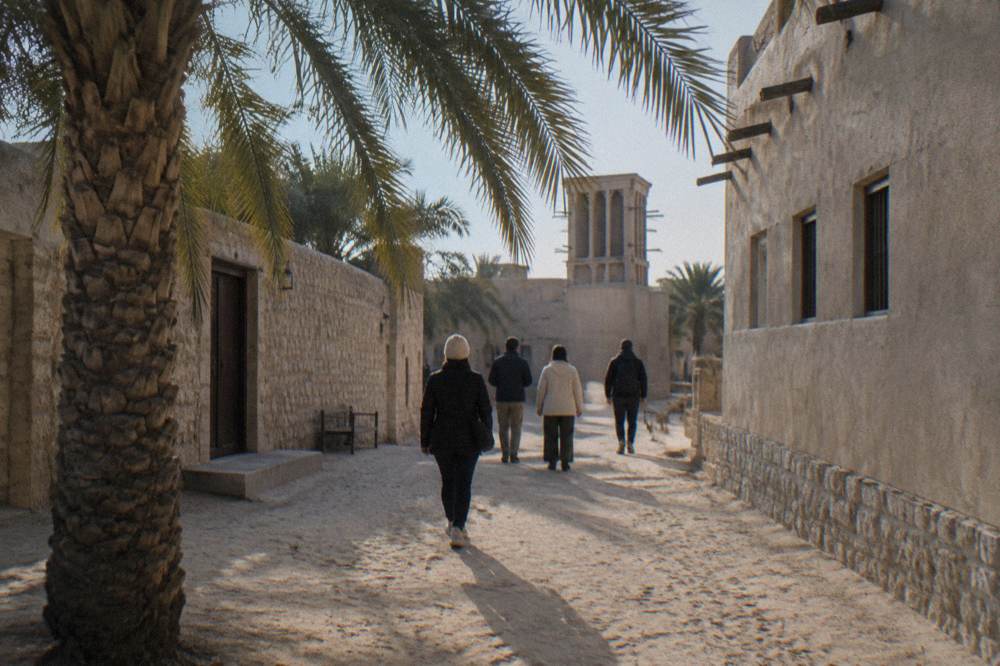
The Al Fahidi Historical Neighbourhood is the historic quarter beside the souks, free to walk at any time within the posted hours, and it is where the oldest surviving domestic architecture in the district sits. The Coffee Museum inside that quarter is also free to enter, though it is closed on Fridays, and its ground floor shop is a paid purchase. That combination, a free heritage quarter with a free museum inside it, is what makes this district one of the most rewarding free areas in the city.
If you want a guide rather than finding your own way, the free walking tour scene here is unusually concentrated. The 7 Hidden Gems of Old Dubai walk on GuruWalk, led by Ameer and starting at KFC Al Seef, is rated 4.85 out of 5 across 27 GuruWalk reviews and runs 2 hours and 30 minutes in English. Its listing title names an abra ride and the souks as part of the route. You can See this free tour and reserve a spot without paying anything up front; you pay the guide what you think the walk was worth at the end.
For context on how these tours work, the question of whether they are genuinely free is covered in detail in are free walking tours really free, and the mechanics of what people typically pay at the end are discussed in how much you pay for a free walking tour. The short version for this district: you reserve a free spot, the walk itself is the product, and the amount you give the guide afterwards is your own choice, with no official figure existing in any source.
What Can You Do In The Old Souk?
Beyond browsing the shops, you can walk the Al Fahidi Historical Neighbourhood, visit the free Coffee Museum, look at the creekside streets of the Al Seef district, and ride the commuter abra across the Creek to the Deira souks. All of the walking and looking is free; only purchases, the AED 2 abra fare and any museum tickets cost money.
Start with the souks themselves, because that is what the district is named for. The Textile Souk is the anchor on the Bur Dubai side, free to walk and browse with no entrance fee. A short distance away by water, the Gold Souk and Spice Souk in Deira are equally free to enter, and together the three form the classic Old Souk circuit that most visitors walk in one outing. There is a dedicated guide to the Gold Souk at gold souk in Dubai, and a fuller day plan for the Deira side at free day in Deira Dubai.
The Al Fahidi Historical Neighbourhood deserves as much time as the souks themselves. It is free to walk at any time within the posted hours, and it holds the Coffee Museum, which is free to enter apart from its shop. One thing to know before you plan the heritage quarter into a museum day: Dubai Museum in Al Fahidi Fort, elsewhere in the same neighbourhood, is closed for restoration, with outside viewing only and no official reopening date. The Etihad Museum and Al Shindagha Museum, both run by Dubai Culture, are paid, at AED 25 and AED 50 per adult respectively.
The Al Seef district, next to the heritage quarter, is also free to walk, with restaurants and shops there being paid purchases. And the Al Shindagha district and its creekside walk are free as well, though the Al Shindagha Museum inside that district carries its AED 50 adult ticket. The pattern to hold onto is simple: districts and streets in this part of Dubai are free, enclosed museums and purchases are not.
For a sense of how the whole old quarter strings together, old Dubai free day walks through the full route, and is Al Seef Dubai free to enter answers the question for that specific district.
Which Souks Are Free To Walk?
All three major souks, the Gold Souk, the Spice Souk and the Textile Souk, are free to walk and browse, with no entrance fee at any of them. The Old Souk area in Bur Dubai and the Al Fahidi Historical Neighbourhood around it are also free to enter. The only costs inside a souk are the things you choose to buy.
That is the complete answer, and it is worth stating plainly because visitors often arrive expecting a gate or a ticket. There is none. The verified record for each souk reads the same way: free to walk and browse, no entrance fee. The souks are working marketplaces, and the shopkeepers are selling to customers, not charging for admission.
| Place | Entry cost | What is paid inside |
|---|---|---|
| Textile Souk, Bur Dubai | Free to walk and browse | Fabric and goods you buy |
| Gold Souk, Deira | Free to walk and browse | Gold and jewellery you buy |
| Spice Souk, Deira | Free to walk and browse | Spices and goods you buy |
| Al Fahidi Historical Neighbourhood | Free to walk within posted hours | Coffee Museum shop purchases |
| Coffee Museum | Free entry, closed Fridays | Ground floor shop purchases |
| Al Seef district | Free to walk | Restaurants and shops |
One boundary worth drawing carefully: the souks are free, but the Creek crossing between them is not. The abra that connects Bur Dubai and Deira is an RTA commuter service at AED 2 per trip, with children under 5 and people of determination riding free on commuter trips. That fare is confirmed on the RTA's own pages at the Roads and Transport Authority. It is a small figure, but it is a real one, and it is the only mandatory cost in a souk-to-souk circuit.
How Do You Cross The Creek To The Souks?
You cross Dubai Creek on the commuter abra, which costs AED 2 per trip, with children under 5 and people of determination riding free. The Electric Abra tour is a separate paid product at AED 60 per 30 minutes per boat. There is no free crossing of the Creek, and no free public transport in Dubai at all.
The abra is the traditional wooden boat service that shuttles commuters between the Bur Dubai and Deira banks of the Creek, and it is the way most visitors move between the Textile Souk side and the Gold and Spice Souks side. The fare is AED 2 per commuter trip on the RTA routes. The Electric Abra, a different product run as a private tour boat, costs AED 60 per 30 minutes per boat, and it is not a substitute for the commuter crossing unless you want the tour. Everything else covered here is indexed on Free Things To Do In Dubai.
The wider transport picture matters if you are building a day around the souks. Nothing in Dubai public transport is free for visitors. A silver nol card covers one zone for AED 3, two adjacent zones for AED 5, and more than two zones for AED 7.50, and the card itself costs AED 25 including AED 19 of balance. The Metro runs Monday to Thursday 05:00 to 24:00, Friday 05:00 to 01:00, Saturday 05:00 to 24:00, and Sunday 08:00 to 24:00. The Blue Line is not open.
| Crossing or transport | Cost | Notes |
|---|---|---|
| Commuter abra crossing | AED 2 per trip | Children under 5 and people of determination free |
| Electric Abra tour | AED 60 per 30 minutes per boat | Private tour boat, not the commuter service |
| Metro, 1 zone, silver nol | AED 3 | Nothing in Dubai public transport is free |
| Metro, 2 adjacent zones | AED 5 | Silver nol |
| Metro, more than 2 zones | AED 7.50 | Silver nol |
| Silver nol card | AED 25 | Includes AED 19 balance |
If you would rather have someone else handle the route between the souks and the Creek, two of the walks here have the crossing named in their listing titles. The Streets of Old Dubai walk on GuruWalk, led by Muhammed and starting at Wokyo Noodle Bar, Al Seef, runs 3 hours in English and Spanish and is rated 4.65 out of 5 across 20 GuruWalk reviews. The Discover ancient Dubai walk, led by Abdalla from Al Fahidi Marine Transport Station, runs 2 hours and 45 minutes in English, German, Spanish and Italian and is rated 4.56 out of 5 across 265 GuruWalk reviews, the largest review pool of any walk in the city.
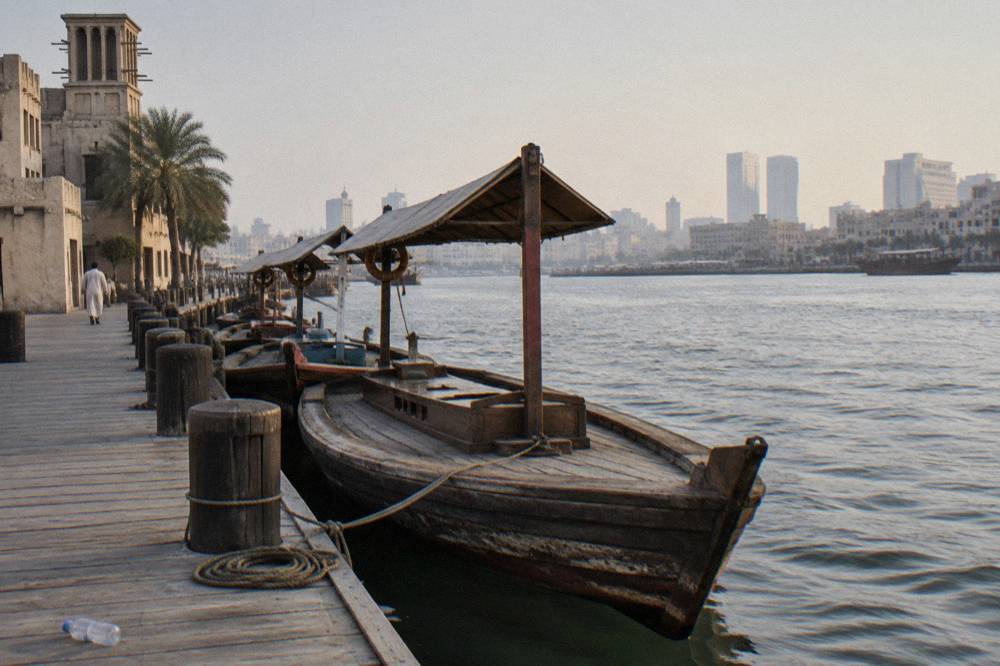
The creek and crossing are covered in more detail at Dubai Creek and the abra crossing, which sets out the fares, the operator and what the crossing does and does not include.
What Do You Pay For In The Souks?
You pay for three things in and around the Old Souk: whatever you buy in the shops, the AED 2 abra crossing if you go between the two banks, and any museum ticket you choose in the surrounding streets. Walking, browsing and entering the souks themselves costs nothing, and no source gives prices for goods, so none appear here.
The shopping is the obvious paid layer, and this page deliberately makes no claim about what anything in the souks costs. No verified price for gold, fabric, spices or any other goods exists in the records behind this site, and no hours claims for individual shops either. What the records do confirm is the entry situation, which is free at every souk, and the boundary between browsing and buying, which is your own decision.
The second layer is transport, covered in full above: the AED 2 commuter abra and the Metro fares if you are arriving from further out. The third layer is culture. Within walking reach of the souks, the Coffee Museum is free, while the Etihad Museum at AED 25 and the Al Shindagha Museum at AED 50 per adult are paid, and Dubai Museum in Al Fahidi Fort is closed for restoration entirely. Dubai Culture, the operator of all these museums, sets its own rules, and its pages at Dubai Culture are the place to check anything museum-specific before a visit.
A practical note on conduct rather than cost: official guidance for the UAE asks visitors to dress modestly in public places such as malls, covering shoulders and knees, keeping swimwear to beaches and pools, and to cross roads only at designated crossings. These are published travel-advice points, not this site's opinions, and they apply in the souk streets as anywhere else in the city.
Which Free Walks Cover The Souks?
Six of the most-reviewed pay what you want walks on GuruWalk cover the Old Souk district, all starting in Old Dubai, with durations from 2 hours and 30 minutes to 3 hours. The strongest reviewed is the Discover ancient Dubai walk at 4.56 out of 5 across 265 GuruWalk reviews. A further seven walks, including the freetour.com listing, appear here as simple text entries rather than full tour profiles.
The most-reviewed walks are six GuruWalk listings with 20 or more English-language reviews each, and the souk district is where nearly all of them run. Their listing titles name the souks, the abra and the old quarter, and every one starts at a meeting point in Al Seef, Al Fahidi or Bastakiya.
| Walk | Guide | Rating on GuruWalk | Duration | Languages |
|---|---|---|---|---|
| Discover ancient Dubai, its culture, and the souks | Abdalla | 4.56 out of 5, 265 reviews | 2 hours 45 minutes | English, German, Spanish, Italian |
| Step Back in Time, Discover the Charms of Old Dubai | Zeeshan | 5 out of 5, 44 reviews | 2 hours 45 minutes | English |
| Discover the Hidden True Dubai YUPTOURS | Taha | 5 out of 5, 27 reviews | 2 hours 45 minutes | English, German |
| 7 Hidden Gems of Old Dubai | Ameer | 4.85 out of 5, 27 reviews | 2 hours 30 minutes | English |
| Discover Old Dubai: A Journey Through History | Mansoor | 4.87 out of 5, 23 reviews | 2 hours 30 minutes | English |
| Streets of Old Dubai | Muhammed | 4.65 out of 5, 20 reviews | 3 hours | English, Spanish |
Read those figures with their pool sizes in mind. A 5 out of 5 from 44 reviews and a 4.56 out of 5 from 265 reviews are different kinds of number: the first is a perfect score on a small pool, the second a strong average on the city's largest pool. Comparing them numerically is more honest than calling either one the best.
Beyond the six most-reviewed GuruWalk walks, the other platform, freetour.com, lists one more walk in the district, the Old Dubai Walking Tour led by junaid from the Arabian Tea House, Al Fahidi, 2 hours in English and rated 9.9 out of 10 across 12 freetour.com reviews, a 10-point scale that is never converted to a 5-point one here. Several other GuruWalk walks also cover this ground, including Abdullah's Dubai heritage walking tour from Bastakiya Bus Parking and Ikram ul haq's walk from Al Fahidi Metro Station, both 2 hours and 30 minutes in English. None of these carry figures in prose on this site beyond what appears above, and all are reachable from their own tour pages.
For a fuller treatment of the whole scene, free walking tours in Dubai on GuruWalk is the dedicated guide, and good walking tours in Dubai ranks the options by review figures. Whichever walk you are weighing, the reserve-then-pay model is the same: a free spot, a walk, and a payment you choose at the end.
One thing no walk here does is leave the old quarter. Every walk starts and runs in Old Dubai, in Al Seef, Al Fahidi and Bastakiya. If your day is centered on Downtown instead, the Dubai Mall, Burj Khalifa and Downtown walk led by Alena starts at Dubai Mall, so one walk does cover that area, though none of the walks enters the Burj Khalifa, a beach or a park, and this site does not imply otherwise.
Common Questions About The Old Souk In Dubai
What To Do In The Old Souk In Dubai?
Walk the covered lanes, browse the textile, gold and spice souks for free, explore the free Al Fahidi Historical Neighbourhood and its free Coffee Museum, and cross the Creek on the AED 2 commuter abra. The walking and browsing cost nothing; shopping, the crossing and any museum tickets are the paid parts.
Is the Old Souk free to enter?
Yes. The Textile Souk in Bur Dubai, and the Gold and Spice Souks in Deira across the Creek, are all free to walk and browse with no entrance fee. The only costs inside are the goods you choose to buy.
How much does the abra crossing cost?
The commuter abra across Dubai Creek costs AED 2 per trip on the RTA routes, with children under 5 and people of determination riding free on commuter trips. The Electric Abra tour is a separate paid product at AED 60 per 30 minutes per boat. There is no free crossing.
Are there free walking tours of the souks?
Yes. Thirteen free walking tours run in Old Dubai and Downtown, listed on GuruWalk and freetour.com, and the souk district is where the most-reviewed walks concentrate. They are free to reserve, pay what you want at the end, and the amount is your choice, with no official figure existing in any source.
Can you visit the museums near the Old Souk for free?
The Coffee Museum in the Al Fahidi Historical Neighbourhood is free to enter, though it is closed on Fridays and its shop is a paid purchase. The Etihad Museum costs AED 25 and the Al Shindagha Museum AED 50 per adult, both run by Dubai Culture. Dubai Museum in Al Fahidi Fort is closed for restoration with no official reopening date.
What is the best walk for the souks and the abra?
By review pool, the Discover ancient Dubai walk led by Abdalla, rated 4.56 out of 5 across 265 GuruWalk reviews, is the strongest reviewed option whose listing title names the souks. The Streets of Old Dubai walk, 4.65 out of 5 across 20 reviews, runs 3 hours and names the souqs and abra in its title. Both start in Old Dubai.