Does Old Dubai Still Exist?
Yes, Old Dubai still exists and its historic quarters are free to walk. This guide covers Al Fahidi, Al Seef, the souks, and what's closed or charged.
Does Old Dubai Still Exist?
Yes, Old Dubai still exists and its historic core sits on both sides of Dubai Creek. The walkable quarters of Al Fahidi, Al Seef, and Al Shindagha are free and open to the public, while the Gold, Spice, and Textile Souks still trade daily. The Dubai Museum is closed for restoration, the abra crossing costs AED 2, and several museums charge entry, but the streets and souks themselves cost nothing to explore.
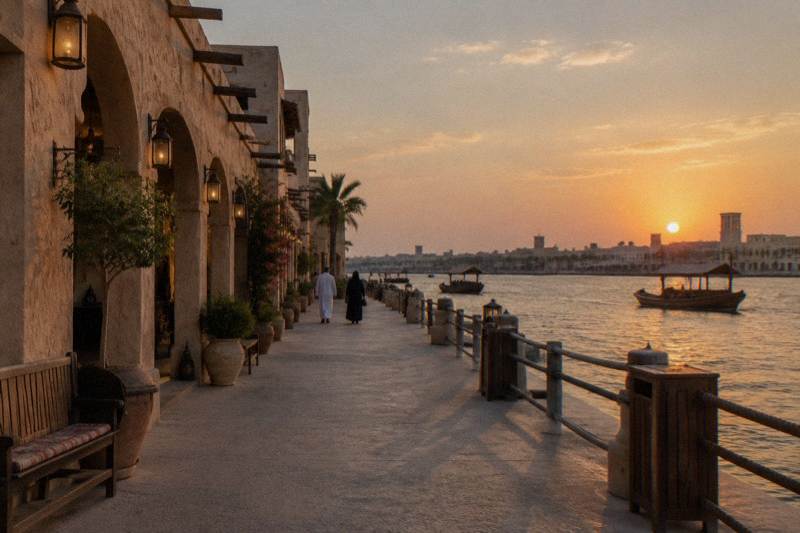
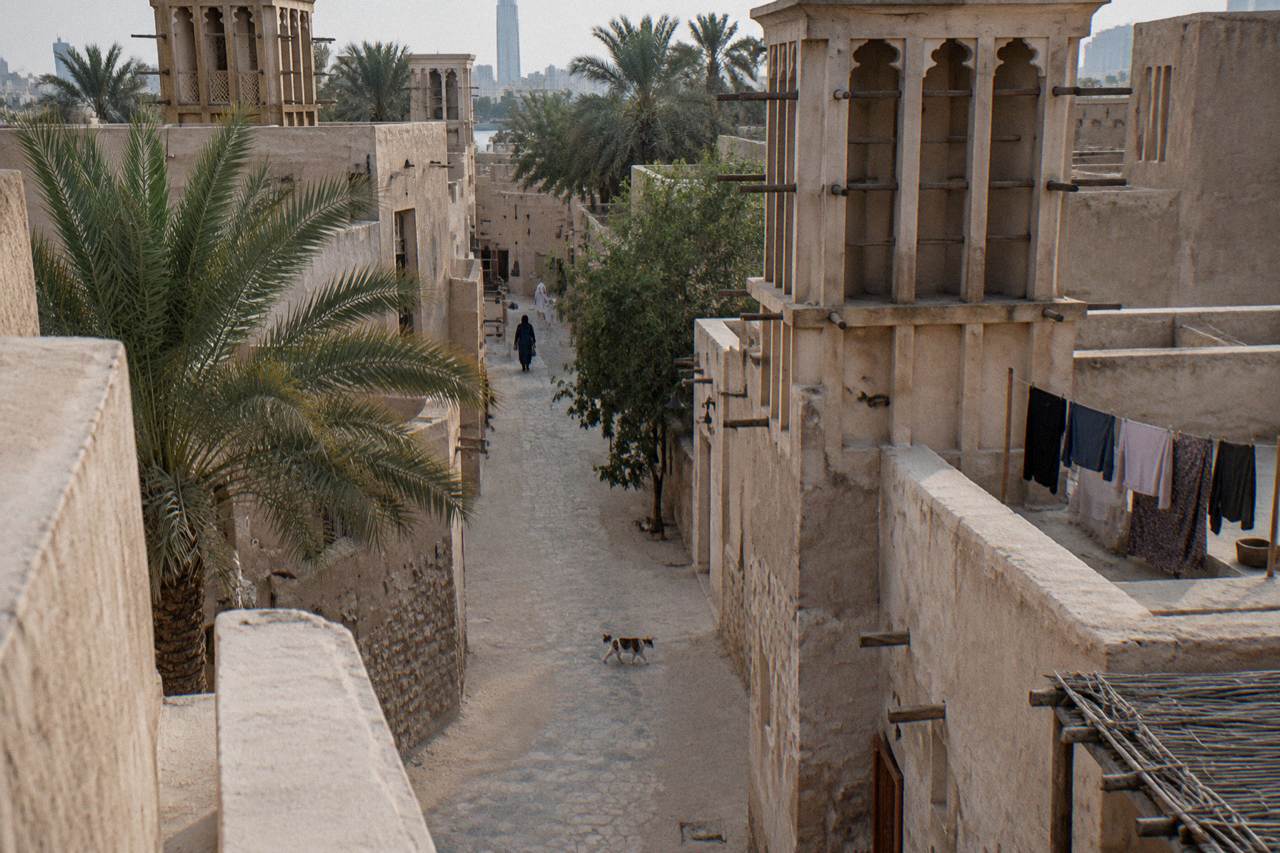
The question comes up because Dubai's skyline tells a story of glass and steel, and the old city is not visible from the metro window or the hotel lobby. But the neighbourhoods that made Dubai a trading port long before the towers rose are still there, and they are not a theme-park reconstruction. Al Fahidi Historical Neighbourhood, with its narrow lanes and wind-tower houses, is a protected district run by Dubai Culture. Al Seef stretches along the Creek with a mix of restored heritage buildings and a modern creekside promenade. Al Shindagha, the historic home of the ruling family, has a free waterfront walk and a paid museum. Across the water, the Gold Souk, Spice Souk and Textile Souk are working markets, not tourist sets. This page from Free Things To Do In Dubai tells you exactly what is open, what costs money and how to reach it.
The old city is compact but layered. A visitor can walk from the Al Fahidi wind-tower houses to the abra station in ten minutes, cross the Creek for AED 2, and step into the covered souks on the Deira side. Nothing is ticketed at the gate except the museums, and the streets themselves are open from early morning until late at night. The Dubai Museum inside Al Fahidi Fort has been closed since 2021 for a major restoration, with no official reopening date announced. The Al Shindagha Museum charges AED 50 for adults and is worth the fee for its multimedia exhibits on the city's pearl-diving and trading past, but the district around it is free. The Etihad Museum, a short walk inland, charges AED 25 and tells the story of the UAE's founding. The Jumeirah Mosque, often listed as an Old Dubai landmark, can only be entered on the paid guided visit run by the Sheikh Mohammed Centre for Cultural Understanding at AED 45 per person, and it is not open for casual walk-ins.
Which Old Quarters Can You Walk Today?
Four distinct quarters make up the walkable Old Dubai, all free to enter. Al Fahidi Historical Neighbourhood is the best-preserved, with wind-tower houses and art galleries. Al Seef runs along the Creek with a promenade and heritage-style buildings. Al Shindagha has a free creekside walk and a paid museum. On the Deira side, the Gold, Spice and Textile Souks are covered markets that cost nothing to browse.
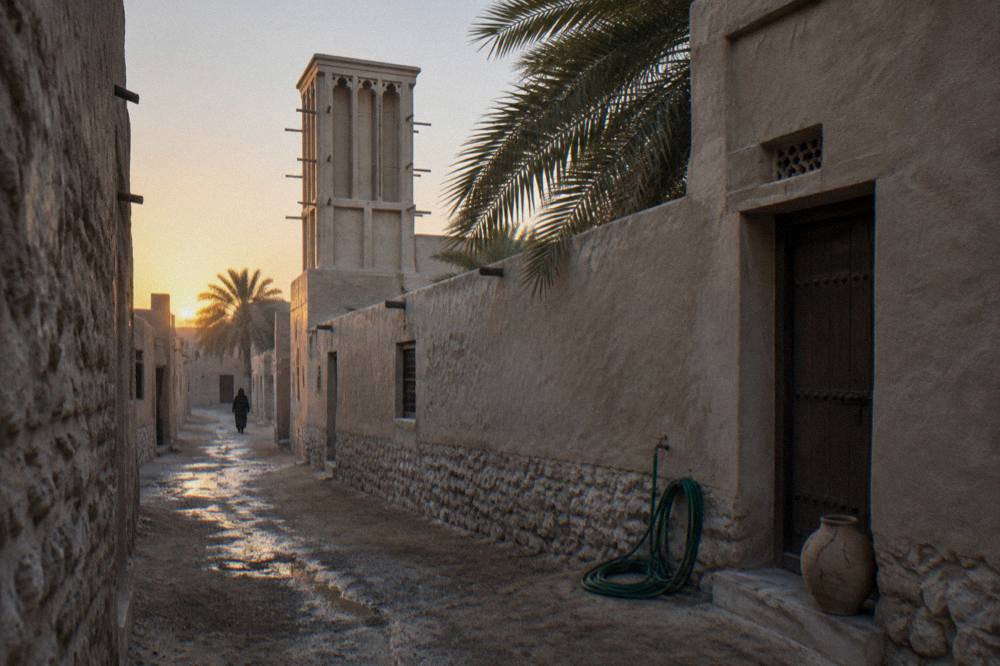
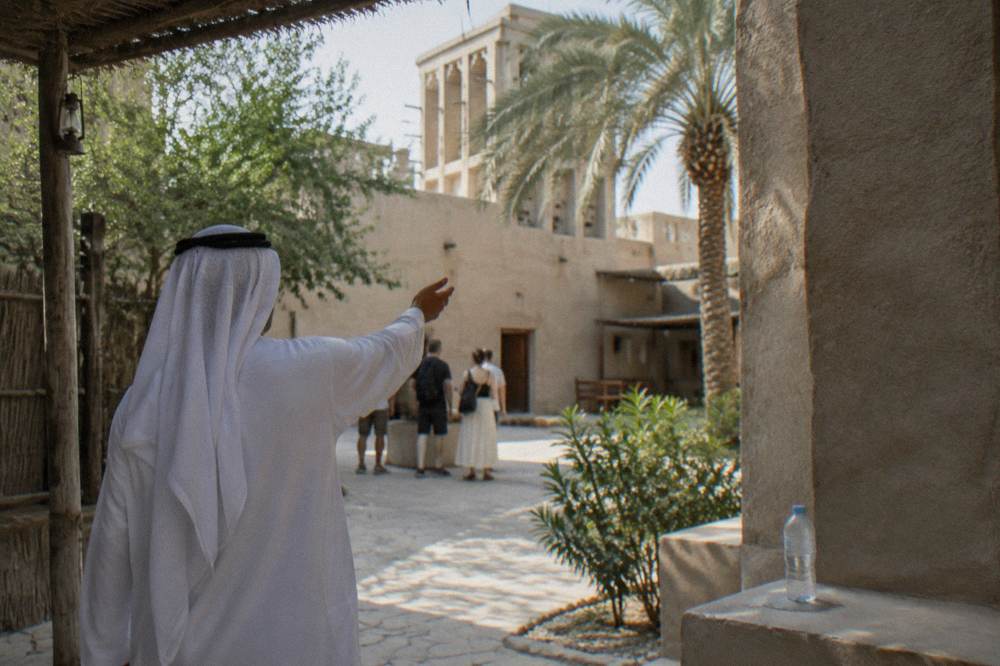
Al Fahidi Historical Neighbourhood, also called Bastakiya, is one of the few remaining parts of the city built before the oil era. The narrow lanes are lined with coral-and-gypsum buildings topped by wind towers, the traditional Gulf air-conditioning system. Dubai Culture maintains the district, and several houses have been turned into small museums and cultural centres. The Coffee Museum on the ground floor of a traditional house is free to enter, though the shop sells paid purchases, and it is closed on Fridays. The neighbourhood is open to walk at any time within its posted hours, and there is no entry gate or ticket. For a deeper look at the area, see the guide to Al Fahidi and the Dubai Museum.
Al Seef is a free creekside promenade along the Dubai Creek waterfront, split into a heritage section with low-rise courtyard buildings and a modern section with shops and restaurants. The creekside promenade is free to walk, and the district is owned by Dubai Holding. It is not a museum but a mixed-use development, so the streets are open day and night. The abra station at the Al Fahidi end of Al Seef is one of the main crossing points to the Deira souks.
Al Shindagha, just west of Al Fahidi, was the home of the Al Maktoum ruling family. The district's creekside walk is free and open to the public, and several restored houses can be viewed from the outside. The Al Shindagha Museum inside the district is paid, at AED 50 for adults, and covers the city's maritime history through interactive exhibits. The area is quiet and less visited than Al Fahidi, and it makes a calm alternative on a busy day.
On the Deira side of the Creek, the Gold Souk, Spice Souk and Textile Souk are covered market streets that have operated for decades. No entrance fee is charged, and the shops are real wholesalers and retailers, not a tourist-only arcade. The Gold Souk is the largest, with several hundred jewellery shops. The Spice Souk is smaller, with sacks of dried herbs, incense and dates. The Textile Souk, near the abra station, sells fabric, pashminas and souvenirs. All three are free to walk and browse, and haggling is part of the market culture. Read more about what to do in the old souk.
| Quarter | Status | Entry Fee | Notes |
|---|---|---|---|
| Al Fahidi Historical Neighbourhood | Free to walk | None | Wind-tower houses, galleries, Coffee Museum free (closed Fridays) |
| Al Seef | Free to walk | None | Creekside promenade, heritage and modern sections |
| Al Shindagha district | Free to walk | None (museum AED 50) | Creekside walk, Al Shindagha Museum paid |
| Gold Souk | Free to browse | None | Covered jewellery market, Deira side |
| Spice Souk | Free to browse | None | Herbs, incense, dates, Deira side |
| Textile Souk | Free to browse | None | Fabric and souvenirs, near abra station |
What Is Closed Or Charged In Old Dubai?
Several Old Dubai landmarks are either closed or charge an entry fee. Dubai Museum inside Al Fahidi Fort has been closed since 2021 for restoration with no reopening date. Al Shindagha Museum costs AED 50, Etihad Museum AED 25, and the Jumeirah Mosque can only be visited on a paid guided tour at AED 45. The abra crossing costs AED 2 per trip, and the public beaches and parks on the Deira side are either paid or not researched.
The most significant closure is the Dubai Museum. Housed in the historic Al Fahidi Fort, the museum was the city's main historical collection until it shut for a full renovation in 2021. The fort's exterior can still be viewed from the street, and the courtyard is sometimes open for events, but the underground galleries are inaccessible. Official sources have not published a reopening date, and news reports in September 2026 described the project as nearing completion without committing to a timeline. For now, the fort is a photo stop, not a museum visit.
The Al Shindagha Museum, part of the wider Al Shindagha Historic District, is open and charges AED 50 per adult. It is a modern museum with multimedia exhibits on Dubai's pearl-diving history, the Creek's role as a trading port, and the city's development. The museum is run by Dubai Culture and is open Saturday to Thursday from 10:00 to 20:00, and Friday from 14:30 to 20:00. The district around it, including the creekside walk, remains free and open.
The Etihad Museum, a short walk inland from Al Shindagha, charges AED 25 and covers the founding of the United Arab Emirates in 1971. Its distinctive curved white building sits on the site where the union agreement was signed. The museum is open daily from 10:00 to 20:00.
The Jumeirah Mosque, often included in Old Dubai itineraries, is not in the historic core but in the Jumeirah district. It is only accessible through the guided visit programme run by the Sheikh Mohammed Centre for Cultural Understanding. The tour costs AED 45 per person, runs at 10:00 and 14:00 daily except Friday, lasts about 1 hour 15 minutes, and requires modest dress. There is no free walk-in access.
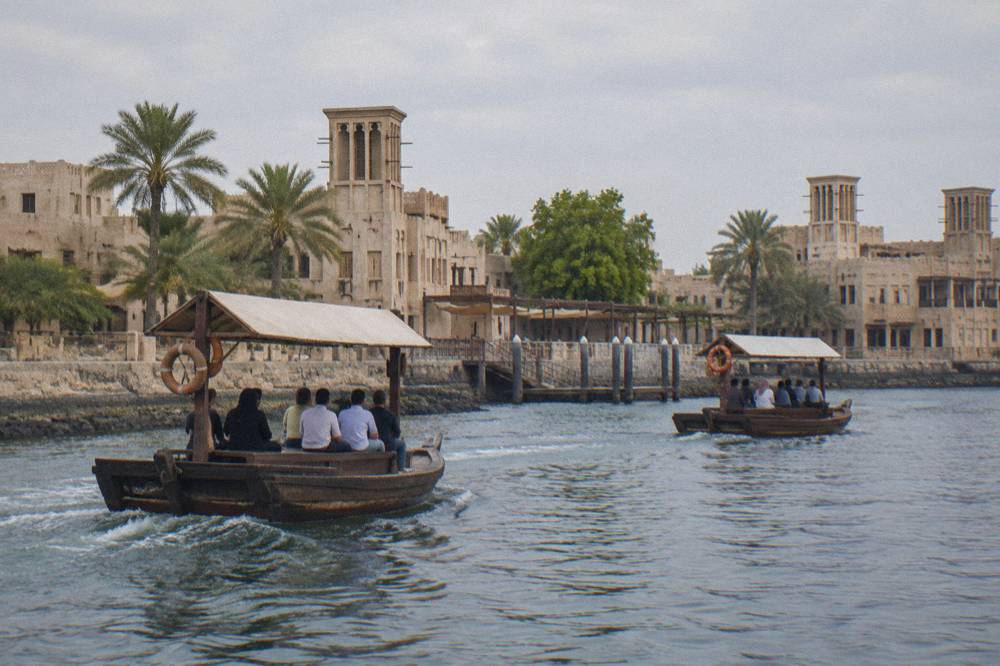
The abra, the small wooden boat that crosses the Creek between the Bur Dubai and Deira sides, is not free. The Roads and Transport Authority charges AED 2 per commuter trip on its regular routes. Children under 5 and people of determination ride free. The Electric Abra tour, a separate 30-minute sightseeing trip, costs AED 60 per boat. The abra is a working transport link, not a free tourist ride, and the fare is collected in cash or by nol card.
| Landmark | Status | Fee | Notes |
|---|---|---|---|
| Dubai Museum (Al Fahidi Fort) | Closed | N/A | Closed since 2021, no reopening date |
| Al Shindagha Museum | Paid | AED 50 | Open Sat-Thu 10:00-20:00, Fri 14:30-20:00 |
| Etihad Museum | Paid | AED 25 | Open daily 10:00-20:00 |
| Jumeirah Mosque | Paid guided visit only | AED 45 | Tours at 10:00 and 14:00, closed Friday |
| Abra crossing | Paid | AED 2 per trip | RTA commuter boats, children under 5 free |
| Electric Abra tour | Paid | AED 60 per boat | 30-minute sightseeing trip |
How Do You Reach Old Dubai?
Old Dubai is served by the Dubai Metro, the abra, and public buses. Metro fares start at AED 3 for a one-zone trip on a Silver nol card, and the trains run from early morning until midnight, with extended hours on Fridays until 1am. The abra costs AED 2 per crossing and connects the Bur Dubai and Deira sides of the Creek. No public transport in Dubai is free for visitors.
The Dubai Metro is the most practical way to reach the Old Dubai districts from other parts of the city. The system operates on a zone-based fare structure. A one-zone trip on a Silver nol card costs AED 3, two adjacent zones cost AED 5, and more than two zones cost AED 7.50. A Red ticket, which is a disposable paper card costing AED 2, charges AED 4 for one zone, AED 6 for two zones, and AED 8.50 for three or more zones. The Silver nol card itself costs AED 25, which includes AED 19 of credit. The Metro runs Monday to Thursday from 05:00 to 24:00, Friday from 05:00 to 01:00, Saturday from 05:00 to 24:00, and Sunday from 08:00 to 24:00. The Blue Line is under construction and not yet open.
The abra boats are the traditional way to cross Dubai Creek. The regular RTA abra routes run between stations on the Bur Dubai side and the Deira side, and the fare is AED 2 per person per trip. The boats are small, open-sided wooden vessels that carry about 20 passengers, and they depart when full. There is no fixed schedule, but the wait is rarely more than a few minutes during the day. The abra is a public transport service, not a tour, and the fare is the same for everyone.
Public buses also serve the Old Dubai area, with routes connecting to the Metro stations and the surrounding neighbourhoods. Bus fares are integrated into the nol card system, with the same zone-based pricing as the Metro. Taxis are widely available and charge a metered fare, starting at AED 5 during the day. No public transport service in Dubai is free for visitors. The nol card is required for Metro, bus and tram travel, while abra fares can be paid in cash or by nol card.
| Transport | Fare | Details |
|---|---|---|
| Dubai Metro (Silver nol) | AED 3 / 5 / 7.50 | 1 zone / 2 adjacent / 3+ zones |
| Dubai Metro (Red ticket) | AED 4 / 6 / 8.50 | Plus AED 2 for the paper card |
| Silver nol card | AED 25 | Includes AED 19 credit |
| Abra crossing | AED 2 | Per trip, children under 5 free |
| Electric Abra tour | AED 60 | Per boat, 30 minutes |
| Public bus | Same as Metro zones | Nol card required |
Which Free Walks Start In Old Dubai?
Thirteen free, pay-what-you-want walking tours run in Old Dubai and Downtown, listed on GuruWalk and freetour.com. Six of the most-reviewed walks start in Al Seef, Al Fahidi or Bastakiya, led by local guides with strong English-language review records. One covers the Dubai Mall area, none covers the Marina or any museum interior, and all but one start in Old Dubai where you pay the guide what you think the walk was worth.
The six most-reviewed walks are spread across the old quarters, and each one has a different guide, route and character. The walk with the largest review count is led by Abdalla, rated 4.56 out of 5 across 265 English-language GuruWalk reviews, and it starts at Al Fahidi Marine Transport Station. It runs for 2 hours and 45 minutes and covers the souks and the Creek, offered in English, German, Spanish and Italian. Zeeshan's walk, rated a perfect 5 out of 5 across 44 reviews, meets at Al Seef Heritage Hotel and is English-only. Taha's YUPTOURS Hidden Dubai Walk, also rated 5 out of 5 across 27 reviews, starts at the Museum of Illusions in Al Seef and is available in English and German. Ameer's walk, rated 4.85 out of 5 across 27 reviews, meets at KFC Al Seef and includes an abra ride in its 2 hours and 30 minutes. Mansoor's two-and-a-half-hour history walk, rated 4.87 out of 5 across 23 reviews, starts at the Arabian Tea House in Al Fahidi and is English-only. Muhammed's three-hour walk, rated 4.65 out of 5 across 20 reviews, meets at Wokyo Noodle Bar in Al Seef and is offered in English and Spanish.
The other platform, freetour.com, lists one more walk, a two-hour Old Dubai tour led by Junaid, rated 9.9 out of 10 across 12 reviews, starting at the Arabian Tea House. That walk is English-only and is not among the six most-reviewed English-capable GuruWalk walks shown here, but its freetour.com page is live and can be reached through the tour directory. The remaining seven walks, including the one Downtown walk that starts at Dubai Mall, have smaller review pools or no published rating, and they sit alongside the six most-reviewed walks in the site's Old Dubai coverage.
All of these walks operate on the same model: you reserve a free spot on the platform, show up at the meeting point, and at the end you pay the guide what you think the walk was worth. The amount is entirely the walker's choice, and no official tip figure exists. The guides are independent operators, not employees of this site, and the walks are listed on GuruWalk and freetour.com, where the live availability and meeting-point details are kept current. To join a walk, visit the walk's GuruWalk page and reserve a spot. See this free tour
| Walk | Guide | Duration | Languages | Rating (GuruWalk, out of 5) | Meeting Point |
|---|---|---|---|---|---|
| Souks And Abra, Four Languages | Abdalla | 2h 45m | English, German, Spanish, Italian | 4.56 (265 reviews) | Al Fahidi Marine Transport Station |
| Old Dubai Charms, English Only | Zeeshan | 2h 45m | English | 5 (44 reviews) | Al Seef Heritage Hotel, Curio Collection by Hilton |
| YUPTOURS Hidden Dubai Walk | Taha | 2h 45m | English, German | 5 (27 reviews) | Museum of Illusions, Al Seef |
| Abra, Camel Milk Tea, Sweets | Ameer | 2h 30m | English | 4.85 (27 reviews) | KFC Al Seef |
| Two-And-A-Half-Hour History Walk | Mansoor | 2h 30m | English | 4.87 (23 reviews) | Arabian Tea House, Al Fahidi |
| Shawarma Stop, Souqs And Abra | Muhammed | 3h | English, Spanish | 4.65 (20 reviews) | Wokyo Noodle Bar, Al Seef |
Common Questions About Old Dubai
Does Old Dubai still exist?
Yes, Old Dubai still exists and its historic quarters on both sides of Dubai Creek are free to walk. Al Fahidi, Al Seef, Al Shindagha and the Gold, Spice and Textile Souks are all open to the public, with no entry fee for the streets and markets. The Dubai Museum is closed for restoration, and the Al Shindagha Museum charges AED 50, but the neighbourhoods themselves are intact and lively.
What can I do in Old Dubai for free?
You can walk the wind-tower lanes of Al Fahidi, stroll the Al Seef creekside promenade, explore the Al Shindagha waterfront, and browse the Gold, Spice and Textile Souks on the Deira side, all without paying a dirham. The Coffee Museum in Al Fahidi is free to enter, though closed on Fridays. The abra crossing costs AED 2, and the museums charge entry, but the streets and markets are free.
Is Al Seef Dubai free to enter?
Yes, Al Seef is free to enter and walk. The creekside promenade, the heritage-style streets and the modern retail section are all open to the public with no gate or ticket. Restaurants and shops inside Al Seef are paid purchases, but the district itself is a free public space.
What to do in the old souk in Dubai?
The Gold Souk, Spice Souk and Textile Souk are free to browse and are working markets, not tourist-only attractions. You can walk the covered lanes, look at the goods, and talk to the shopkeepers. There is no entrance fee, and no purchase is required. The souks are on the Deira side of the Creek, a short abra ride from the Bur Dubai side.
Are free walking tours really free?
The walking tours listed on GuruWalk and freetour.com are free to reserve and join. You pay the guide what you think the walk was worth at the end, with no set amount and no obligation. The model is pay-what-you-want, and the guides are independent operators. No official tip figure exists, and the amount is entirely the walker's choice.
How much does the abra cost in Old Dubai?
The regular RTA abra crossing costs AED 2 per person per trip. Children under 5 and people of determination ride free. The Electric Abra tour, a separate 30-minute sightseeing trip, costs AED 60 per boat. The abra is a public transport service, not a free tourist ride.