Jumeirah Mosque: How A Visit Works And What It Costs
Jumeirah Mosque is one of Dubai's most photographed buildings, and one of the few mosques in the city that visitors can enter at all. The catch is that entry is never free and never unguided: the only way inside is the paid guided visit run by the Sheikh Mohammed Centre for Cultural Understanding. This page sets out exactly what that visit costs, when it runs, what to wear, and which genuinely free heritage places pair well with it.
Short answer
No, you cannot visit Jumeirah Mosque for free. The mosque is not open to walk in: the only entry is the guided visit run by the Sheikh Mohammed Centre for Cultural Understanding, listed at AED 45 per person, at 10:00 and 14:00 daily except Friday, lasting about 1 hour 15 minutes, with modest dress required.
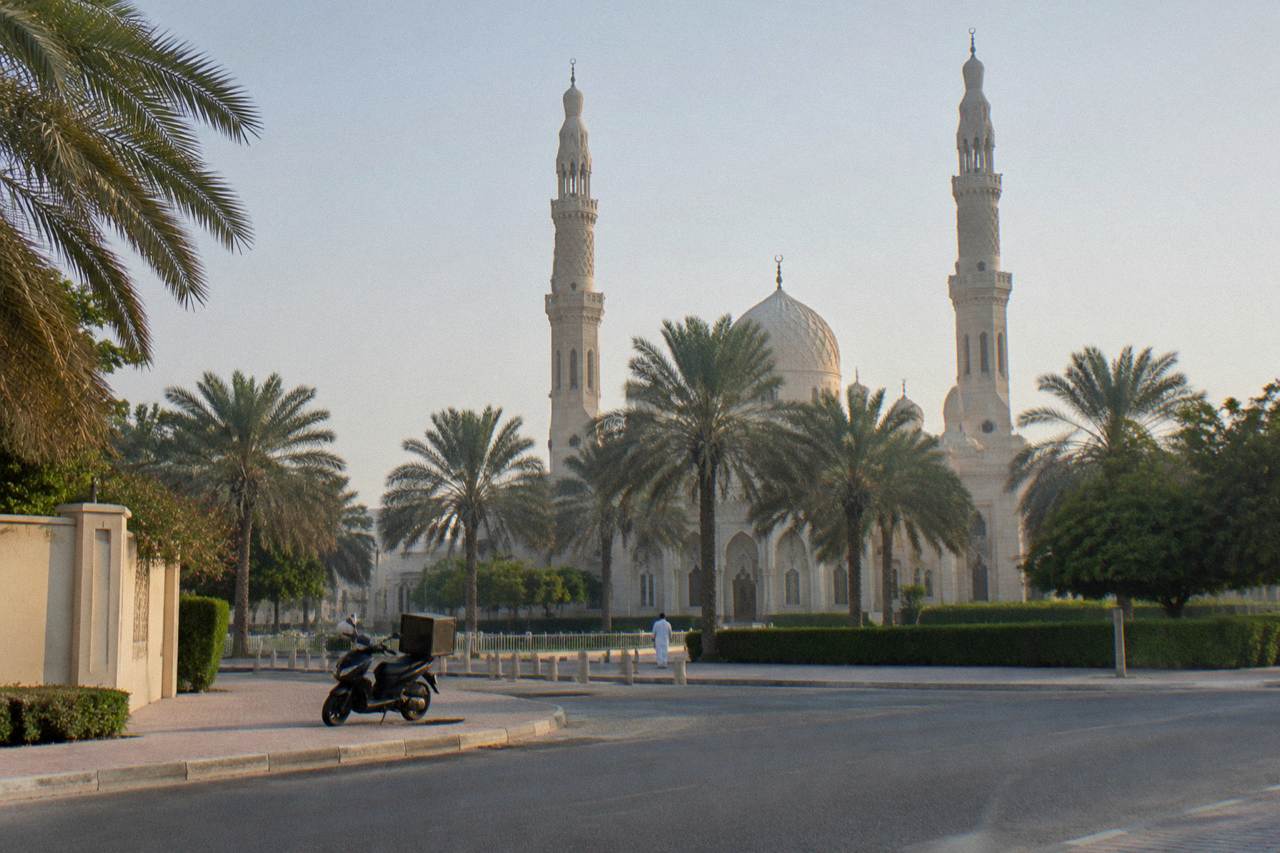
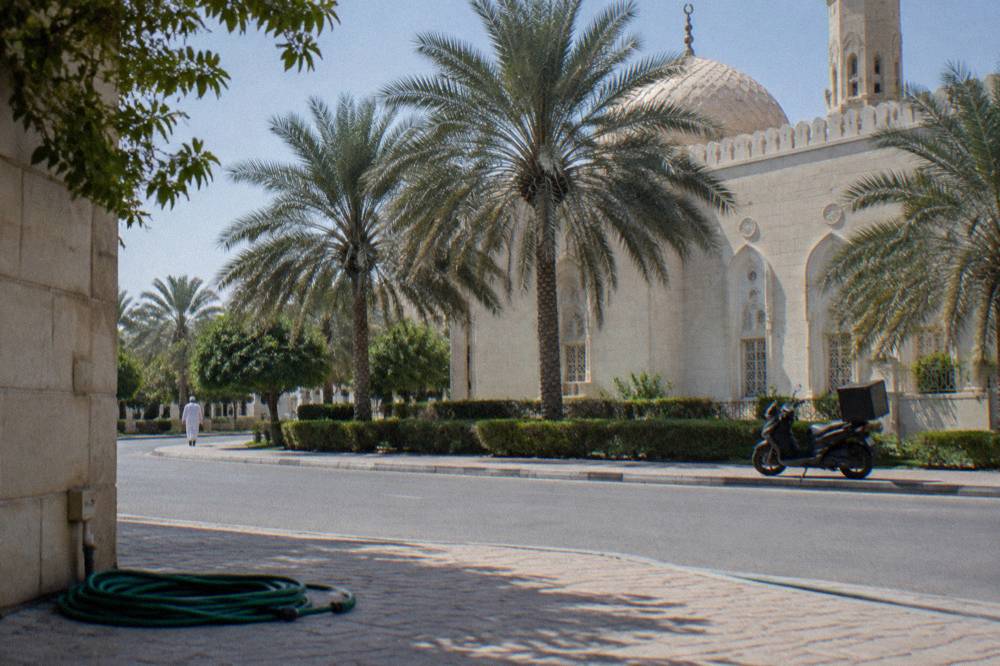
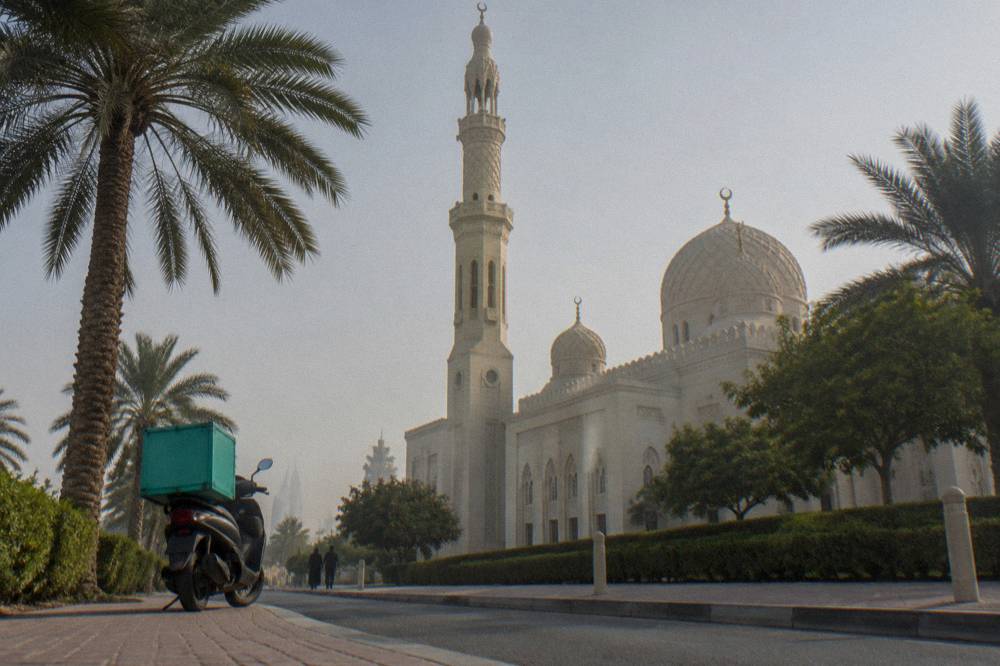
Jumeirah Mosque sits at the top of most Dubai sightseeing lists, and it earns the place honestly: a white stone building with twin minarets and a large central dome, built in the tradition of Fatimid architecture. What most lists skip is the entry rule. This is not a monument you can wander into with a camera. The mosque is closed to casual entry, and the only door open to visitors is the one operated by the Sheikh Mohammed Centre for Cultural Understanding, a Dubai institution whose whole purpose is explaining Emirati culture to outsiders.
That door has a price. The centre's listed details put the guided visit at AED 45 per person, running at 10:00 and 14:00 every day except Friday, lasting about 1 hour 15 minutes. Those figures come from the centre's own published information, set by the mosque's own operators, and they are the figures to plan around about the visit, because no other verified source exists. Everything else you may have read about free mosque entry in Dubai describes a different building or an outdated arrangement.
The honest framing matters here. This site exists to catalog what is free in Dubai, and Jumeirah Mosque is one of the clearest cases of not-free in the entire catalog. It belongs in the same mental folder as the Dubai Frame and the observation decks of the Burj Khalifa: a landmark whose exterior costs nothing to look at and whose interior is a ticketed experience. The difference is that the mosque's ticket buys something the others do not, a structured introduction to Emirati culture and Islam delivered by an organisation set up for exactly that conversation.
There is a second half to this guide, and it is the half that saves money. Dubai has a cluster of genuinely free heritage sites, from the Al Fahidi Historical Neighbourhood to the creekside Al Shindagha district, and several of them sit within the same half-day orbit as a sensible mosque trip. By the end of this page you will know what the visit costs, what it includes, what to wear, which days it runs, and which free places can carry the heritage side of your day if AED 45 does not fit the budget.
Can You Visit Jumeirah Mosque For Free?
No. A visit to Jumeirah Mosque is never free and never unguided: the mosque is not open to walk in, and the only entry is the paid guided visit run by the Sheikh Mohammed Centre for Cultural Understanding, listed at AED 45 per person, about 1 hour 15 minutes long. Free heritage experiences exist elsewhere in Dubai, but this building is not one of them.
The single most important fact on this page is the entry rule. Many of Dubai's mosques are closed to non-Muslim visitors entirely, and Jumeirah Mosque is the notable exception, but the exception comes with conditions attached. You cannot arrive independently, remove your shoes and look around. The building opens to visitors only through the centre's programme, which pairs the mosque itself with a guide who explains the space, the faith and the culture around it. That structure is the product: the visit is educational by design, not a photo stop with a turnstile.
The AED 45 figure deserves a sentence on sourcing. It appears in the centre's published visit details, as published on the Sheikh Mohammed Centre for Cultural Understanding's own website. It is the only price this page will state for the visit, and it is written here as the centre's listed price rather than as a promise, because the centre sets and can change its own fee. If your budget is tight, treat AED 45 as the planning number and confirm it on the centre's page before you travel.
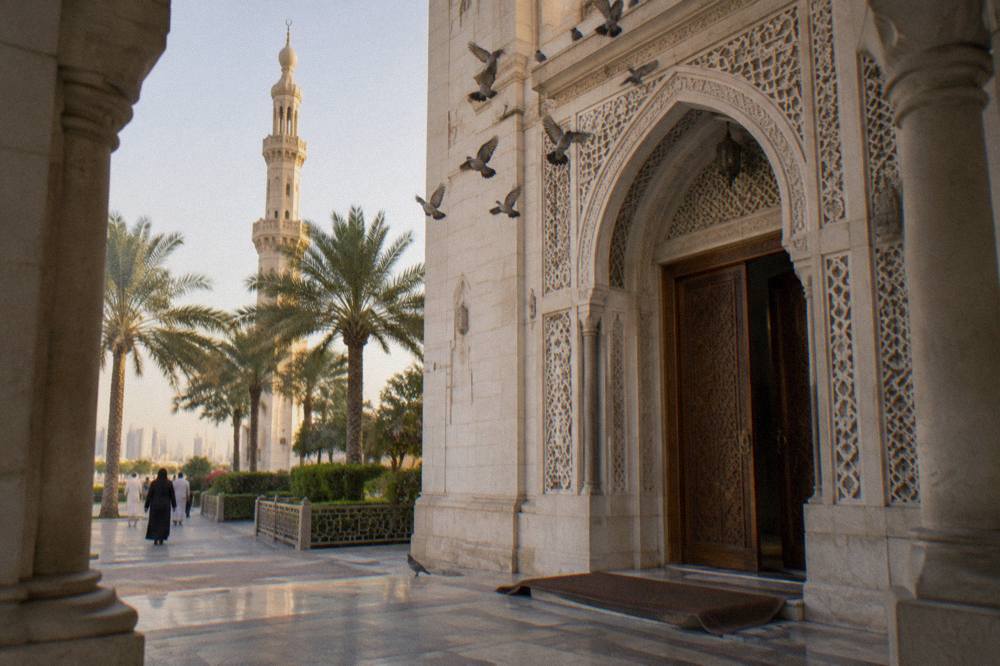
What the fee buys is a fixed format. The visit runs about 1 hour 15 minutes, starts at one of two morning or afternoon times, and is led by the centre's guides rather than by mosque staff. Modest dress is required, a condition this page returns to in full below, because it is the one part of the arrangement that turns people away at the door. Nothing in the verified record describes the interior route, the topics covered or any included refreshment, so this page states none of that. What is verified is the price, the times, the duration, the operator and the dress rule.
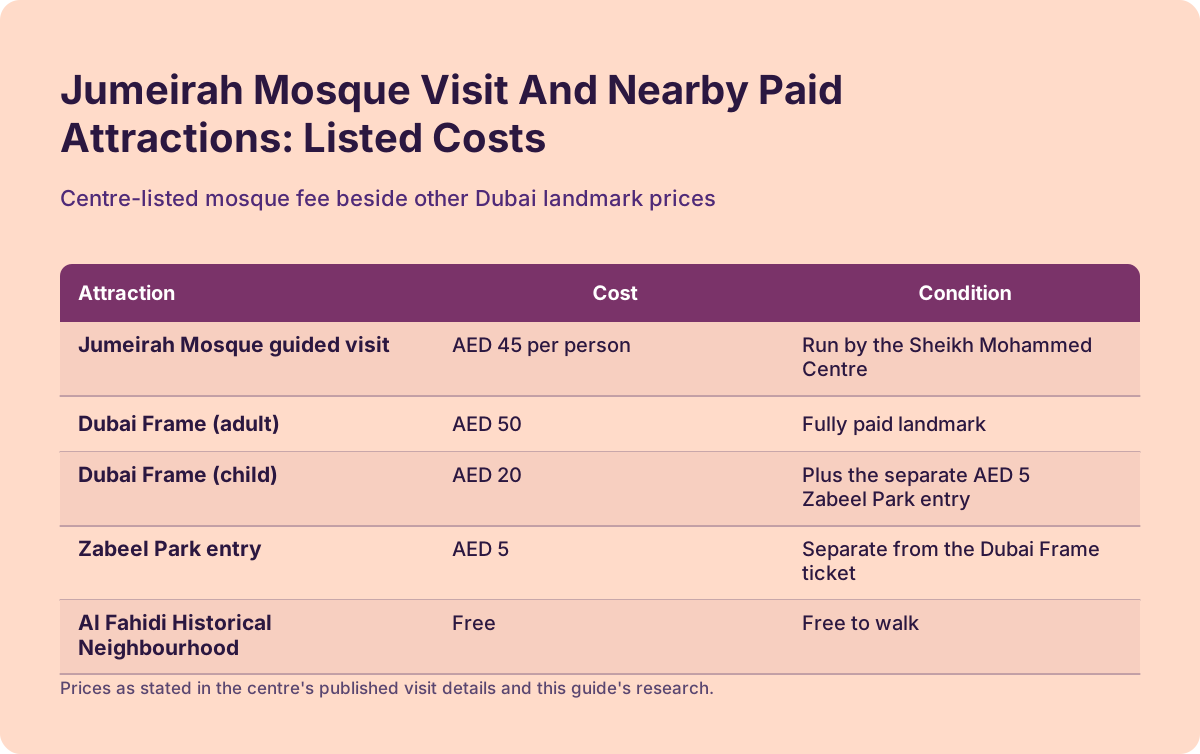
It helps to place the mosque in Dubai's wider pay-structure. The city's headline attractions divide cleanly into three groups: free exteriors with paid interiors, like the Burj Khalifa and the Dubai Aquarium's free corridor-facing viewing panel; fully paid landmarks, like the Dubai Frame at AED 50 adult and AED 20 child plus the separate AED 5 Zabeel Park entry; and genuinely free places, like the public beaches and the Al Fahidi Historical Neighbourhood. Jumeirah Mosque sits in the first group, with one twist: there is no free interior option at all, not on any day, not at any hour. The Friday exception, covered in detail later, removes the visit entirely rather than discounting it.
| What | Cost | Condition |
|---|---|---|
| Guided visit inside Jumeirah Mosque | AED 45 per person | Run by the Sheikh Mohammed Centre for Cultural Understanding |
| Session times | 10:00 and 14:00 | Daily except Friday |
| Duration | About 1 hour 15 minutes | Fixed format, centre-guided |
| Dress | Modest dress required | Condition of entry |
| Walking in without the visit | Not possible | The mosque is not open to casual entry |
If the fee changes your plans, the honest alternative is not a cheaper mosque visit but a different kind of heritage experience. Dubai's old quarter, the Al Fahidi and Al Seef stretch along the Creek, is free to walk and carries more of the city's lived history per square metre than any single building ticket. The final section of this guide maps those free options in detail, including the Coffee Museum, which is free to enter, and the Al Shindagha district, whose creekside walk costs nothing while its museum charges AED 50.
How Does The Guided Visit Work?
The visit is a scheduled, ticketed session: you book the guided visit through the Sheikh Mohammed Centre for Cultural Understanding, pay the listed AED 45 per person, and join a group at 10:00 or 14:00 on any day except Friday. The session lasts about 1 hour 15 minutes and modest dress is a condition of taking part.
The mechanics are simple because the centre keeps them simple. There is one product, one price and two daily times. The 10:00 session and the 14:00 session are the same format, so the choice between them is purely a scheduling one: which fits the rest of your day better. Nothing in the verified record distinguishes morning from afternoon sessions in content or length, so this page does not either. Pick the slot, book the visit, turn up dressed modestly.
What the guide actually does during those 75 minutes is not something the verified records describe, and this site does not invent walkthroughs. The centre's own purpose is cultural understanding, its programme is built around explaining Emirati life and Islam to visitors, and the mosque is its classroom. Beyond that, the honest description is structural: a guide, a group, a building, and a fixed window of about 1 hour 15 minutes. If you want to know whether the session covers a particular topic, the centre's page is the place to ask, because no third-party source this site trusts has captured the content.
Booking is where most questions arrive. The verified facts stop at the price, the times, the duration and the dress rule, so the practical advice is equally short: arrange the visit through the centre rather than through any street seller or reseller, and confirm the current fee when you do. Dubai's tourism economy has no shortage of packaged mosque experiences sold at markups, and the centre's own listed price of AED 45 is the benchmark any offer should be measured against. An offer well above that figure is a middleman's margin, not a better visit.
One comparison is worth making while you are deciding. Dubai also has a pay-what-you-want walking tour scene, thirteen free walking tours in total across Old Dubai and Downtown, listed on GuruWalk and freetour.com, where you reserve a free spot and pay the guide what you think the walk was worth at the end. Those walks run in the old quarter, not at the mosque, and they cover a neighbourhood rather than a single building, but the pricing model is the mirror image of the mosque visit: the centre charges a fixed fee up front, the walks charge nothing fixed at all. Some visitors do both in one day, the mosque session in the morning and a walk in the afternoon, and the two formats complement rather than compete.
The three GuruWalk walks above are among the most-reviewed Old Dubai walks on the site, and each is free to reserve with a pay-what-you-want ending. They are not mosque tours and should not be read as such. What they offer is the surrounding context: the Al Fahidi lanes, the souks and the Creek-side streets that make up the Dubai the mosque belongs to. If the AED 45 session is the deep dive into one building and one faith, a walk is the wide shot of the whole historic district, and the two together make a coherent day.
| Visit detail | What the record states |
|---|---|
| Operator | Sheikh Mohammed Centre for Cultural Understanding |
| Price | AED 45 per person, per the centre's listed details |
| Times | 10:00 and 14:00 |
| Days | Daily except Friday |
| Length | About 1 hour 15 minutes |
| Entry condition | Modest dress required |
A note on expectations, because it saves disappointment. The visit is a cultural programme, not a self-guided photo opportunity. If what you want is pictures of the mosque, the exterior delivers that without a ticket and without a timeslot. If what you want is to stand inside a working mosque and have someone answer questions about Emirati life, the paid visit is the only confirmed way to go inside, and AED 45 is what the guided visit costs.
What Should You Wear For A Mosque Visit?
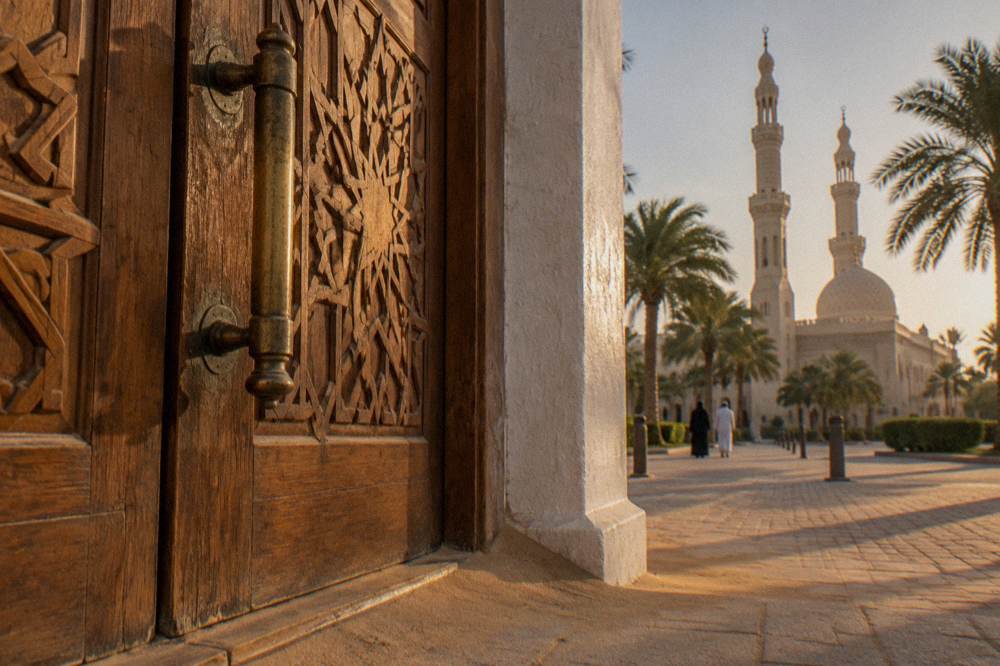
Modest dress is required for the Jumeirah Mosque visit, and it is a condition of entry rather than a suggestion. Cover shoulders and knees, avoid transparent clothing and anything with offensive imagery or phrases, and keep swimwear strictly for beaches and pools. The centre's own visit conditions state modest dress; the broader rules below are the official public dress guidance for Dubai.
The dress rule has two layers. The first is the mosque's own: the centre lists modest dress as a condition of the guided visit, and a visitor who does not meet it can be turned away from a session they have paid for. The second layer is Dubai's general public dress guidance, published in the travel advice this site's research recorded: dress modestly in public places such as malls, women should cover shoulders and knees, underwear must not be visible, no transparent clothing, and nothing carrying offensive imagery or phrases. Swimwear belongs on beaches and at pools only. A mosque visit sits at the strict end of that spectrum, so the safe rule is the simplest one: the most covered-up outfit in your suitcase.
What the verified record does not state is worth stating plainly. The research notes report that abayas and scarves are provided at the centre's visits, but flags this as unconfirmed, so this page does not rely on it and neither should you. Plan to arrive dressed for the requirement, not dressed to borrow. That single assumption removes the risk entirely, and it costs nothing: loose trousers, a long skirt or full-length dress, sleeves past the elbow, and a scarf you can drape if you want one are all standard travel items.
The dress guidance connects to a wider set of official conduct notes that visitors do well to know before a day that includes a mosque. Public displays of affection are frowned upon and kissing in public can lead to arrest. Swearing and rude gestures, including online, are illegal. Drinking in a public place is illegal anywhere in the UAE, with a legal drinking age of 21 in Dubai. Crossing the road anywhere other than a designated pedestrian crossing is illegal and can bring a fine or imprisonment. None of these rules is about the mosque specifically, but a heritage day in Jumeirah is a day in public Dubai, and the official guidance applies throughout it.
| Item | Official guidance |
|---|---|
| Shoulders and knees | Covered in public places such as malls |
| Underwear | Must not be visible |
| Fabric and slogans | No transparent clothing, no offensive imagery or phrases |
| Swimwear | Beaches and pools only |
| Mosque visit | Modest dress required as a condition of entry |
Practical packing advice follows directly. The same outfit that satisfies the mosque satisfies the malls and the heritage districts, so one modest set of clothes covers the whole cultural side of a Dubai trip. There is no verified guidance about footwear for the mosque visit, and mosques generally involve removing shoes, but since the record does not state it for this visit, the safe move is shoes that slip off easily. Beyond that, the dress question is settled by the table above, and the remaining variables are the calendar and the clock.
Which Days Does The Visit Run?
The guided visit runs daily except Friday, at 10:00 and 14:00, so Friday is the one day of the week with no mosque session at all. That makes Friday the natural day to programme the free heritage alternatives instead, several of which also run on changed hours that day: the Coffee Museum is closed Fridays, and the Jameel Arts Centre opens at 12:00.
The Friday gap is the detail that catches people out. A visitor who has heard "twice a day, every day" and arrives on a Friday finds nothing running. The centre's listed schedule excludes Friday entirely, and this site's research found no partial or replacement session for that day. If your itinerary is flexible, any day but Friday works, and the choice between 10:00 and 14:00 is purely logistical. If Friday is fixed, the mosque drops off the plan and the free heritage list in the next section becomes the plan.
Friday also changes other things in Dubai, which matters if you are building the rest of the day. The Metro runs 05:00 to 01:00 on Fridays, per the transport authority's published hours, a later close than the midnight ending of most weekdays. The Coffee Museum in Al Fahidi is closed on Fridays. The Jameel Arts Centre opens at 12:00 on Fridays and is closed on Tuesdays, the mirror image of the mosque's pattern. And Jumeirah Mosque visits do not run on Fridays at all. None of this is trivia: it is the difference between a day that flows and a day of locked doors.
Timing the rest of a mosque day is straightforward arithmetic. A 10:00 session of about 1 hour 15 minutes ends before midday, leaving the afternoon for the old quarter, which is where the city's free heritage sites cluster. A 14:00 session does the reverse, and pairs naturally with a morning in Al Fahidi followed by the mosque and then the evening elsewhere. Transport is never free in Dubai, so budget the fares alongside the AED 45: a single-zone Metro trip costs AED 3 on a silver nol card, two adjacent zones AED 5, and the silver nol card itself costs AED 25 including a AED 19 balance, per the transport authority's fare pages.
One seasonal note belongs here rather than anywhere else. Ramadan changes the rhythm of the whole city: shops and restaurants change hours, and hotels and restaurants serving food or drink in fasting hours may screen you from Islamic guests, per the official travel guidance this site recorded. Ramadan 2027 is expected to begin about 8 February 2027 by astronomical projection, though the date is set by moon sighting and is not confirmed until it is declared. If your trip falls in that window, treat every published time in this article, the mosque sessions included, as something to re-check close to travel.
The box above is the site's highlighted walk for this article, the two-and-a-half-hour history walk led by Mansoor from the Arabian Tea House in Al Fahidi, rated 4.87 out of 5 across 23 GuruWalk reviews. It is the natural companion to a mosque day: the paid session for the building and the faith, the pay-what-you-want walk for the district and the streets around it. You can see this free tour on its GuruWalk page, where the reserve-a-spot model means nothing is paid until you decide what the walk was worth.
Which Free Places Teach Emirati Heritage Instead?
Yes, there are free alternatives, and they are substantial: the Al Fahidi Historical Neighbourhood is free to walk within its posted hours, the Coffee Museum is free to enter, and the Al Shindagha district with its creekside walk is free. The paid exceptions inside this free cluster are the Al Shindagha Museum at AED 50 and the Etihad Museum at AED 25, and Dubai Museum in Al Fahidi Fort is closed for restoration.
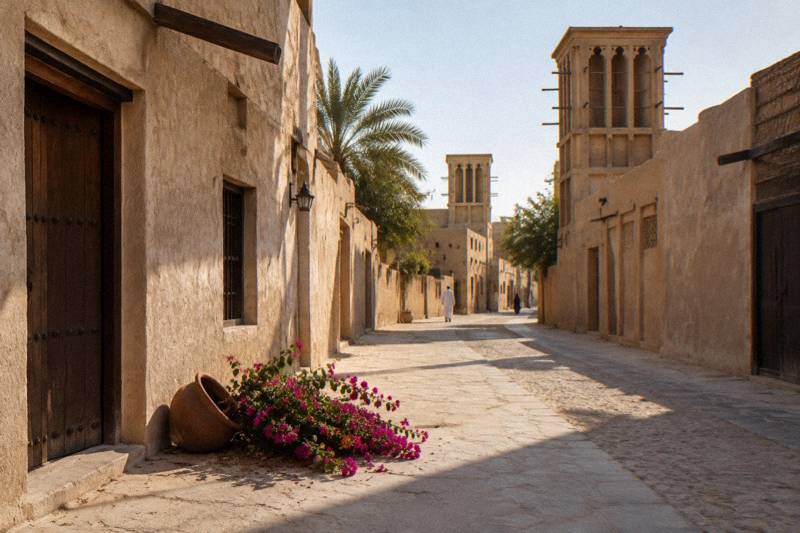
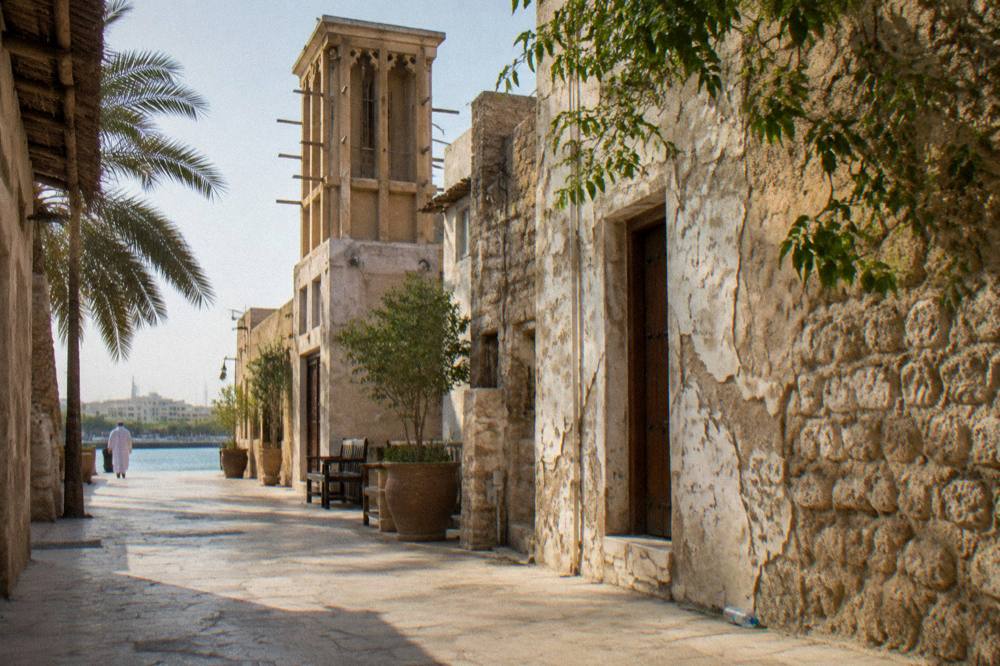
Start with Al Fahidi, because it is the anchor of the free heritage side and the meeting point of several walking tours. The Al Fahidi Historical Neighbourhood is free to walk at any time within its posted hours, per the Dubai Culture record, and it is the largest concentration of old Dubai fabric the city has. The Coffee Museum inside the district is free to enter, with one condition worth planning around: it is closed on Fridays, and its ground-floor shop is a paid purchase rather than part of the visit. Both sit in the same district as the Arabian Tea House, the meeting point of the popular history walk, which is why the walk and the free district pair so naturally.
The Creek's other bank adds the Al Shindagha district, free to walk including its creekside walk, and the site of a sharp free-versus-paid split: the district costs nothing, while the Al Shindagha Museum inside it charges AED 50 per adult. The same split repeats across Dubai Culture's portfolio. The Etihad Museum charges AED 25. Dubai Museum in Al Fahidi Fort, the oldest museum site in the district, is closed for restoration with no official reopening date, so outside viewing is all that exists there right now (see Free Right Now). These are separate regimes with separate rules, and one free record never describes another's pricing.
The full free-day blueprint is on a sibling page, the free day in Old Dubai guide, and the museum situation in Al Fahidi is tracked in the Al Fahidi and Dubai Museum guide. For a mosque-and-heritage day specifically, the shape that works is: the 10:00 mosque session, then Al Fahidi and the Coffee Museum on foot, then the Creek and Al Shindagha if the afternoon holds. The only fixed costs in that entire day are the AED 45 visit and the transport fares; every district and museum listed above as free is free.
| Heritage place | Status | Condition |
|---|---|---|
| Al Fahidi Historical Neighbourhood | Free | Free to walk within posted hours |
| Coffee Museum | Free | Closed Fridays; the shop is a paid purchase |
| Al Shindagha district and creekside walk | Free | Free to walk |
| Al Shindagha Museum | Paid | AED 50 per adult, run by Dubai Culture |
| Etihad Museum | Paid | AED 25, run by Dubai Culture |
| Dubai Museum, Al Fahidi Fort | Closed | Closed for restoration, outside viewing only |
The walking tours slot into this free layer rather than competing with it. Thirteen free walking tours run in Old Dubai and Downtown in total, listed on GuruWalk and freetour.com, and every one of the six most-reviewed walks starts in the old quarter, from the Al Seef hotels and the Al Fahidi tea house to the Museum of Illusions meeting point. None of them visits Jumeirah Mosque or any mosque interior, and none should be booked as a substitute for the centre's visit. What they add is a guide through the free districts above, at a price you set yourself. The question of whether that model is really free is unpacked in this walkthrough of how free tours work.
For readers weighing the whole day's budget, the split is clean. The mosque visit is the one heritage experience in this article that cannot be done for free, at AED 45 per person on any day except Friday. Everything else on this page, the districts, the Coffee Museum, the creekside walks and the pay-what-you-want tours, costs nothing fixed. Whether the mosque's hour and a quarter is worth its price against a free day in the old quarter is a judgement this page leaves to you; both options are real, both are verified, and the honest answer is that they do different jobs.
The three walks above join the site's six most-reviewed GuruWalk walks, all free to reserve with a pay-what-you-want ending. The Free Things To Do In Dubai directory carries the full set alongside the free-attraction catalog, and the walk pages hold the meeting points, durations and language details for each. Whichever way you build the day, the one rule this page will repeat is the one it opened with: the mosque is paid, the districts are free, and knowing which is which is most of the battle.
Common Questions About Visiting Jumeirah Mosque
Can you visit Jumeirah Mosque for free?
No. The mosque is not open to walk in, and the only entry is the paid guided visit run by the Sheikh Mohammed Centre for Cultural Understanding, listed at AED 45 per person. There is no free session, no free day and no self-guided option.
How much does the Jumeirah Mosque visit cost?
AED 45 per person, per the centre's listed details. The visit lasts about 1 hour 15 minutes and modest dress is required. Confirm the current fee on the centre's page before you travel, since the centre sets its own price.
What time is the Jumeirah Mosque visit?
The guided visit runs at 10:00 and 14:00, daily except Friday. The two sessions are the same format, so the choice is purely a scheduling one.
Is Jumeirah Mosque open on Friday?
No. Friday is the one day with no guided visit at all. If Friday is fixed in your itinerary, plan the free heritage alternatives instead, and note that the Coffee Museum is also closed on Fridays.
What should you wear to Jumeirah Mosque?
Modest dress is required as a condition of entry. Cover shoulders and knees, avoid transparent clothing and anything with offensive imagery or phrases, and keep swimwear for beaches and pools. Reports that abayas and scarves are provided are unconfirmed, so arrive dressed for the requirement.
What free heritage places can you visit instead?
The Al Fahidi Historical Neighbourhood is free to walk within posted hours, the Coffee Museum is free to enter, and the Al Shindagha district and its creekside walk are free. The Al Shindagha Museum at AED 50 and the Etihad Museum at AED 25 are paid, and Dubai Museum in Al Fahidi Fort is closed for restoration.