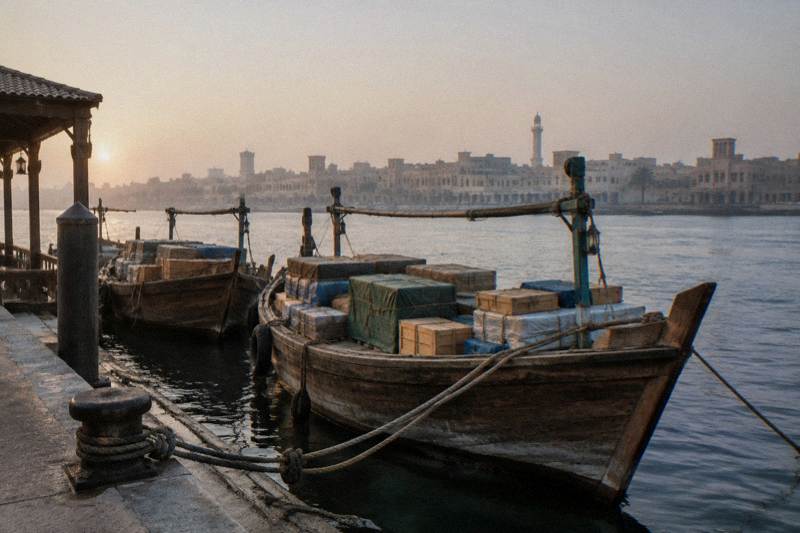
Is It A Good Idea To Visit Dubai During Ramadan?
A fact-checked answer to whether Ramadan is a good time to visit Dubai: what officially changes, the 2027 dates, dress and conduct rules, free places that stay open, and transport hours.
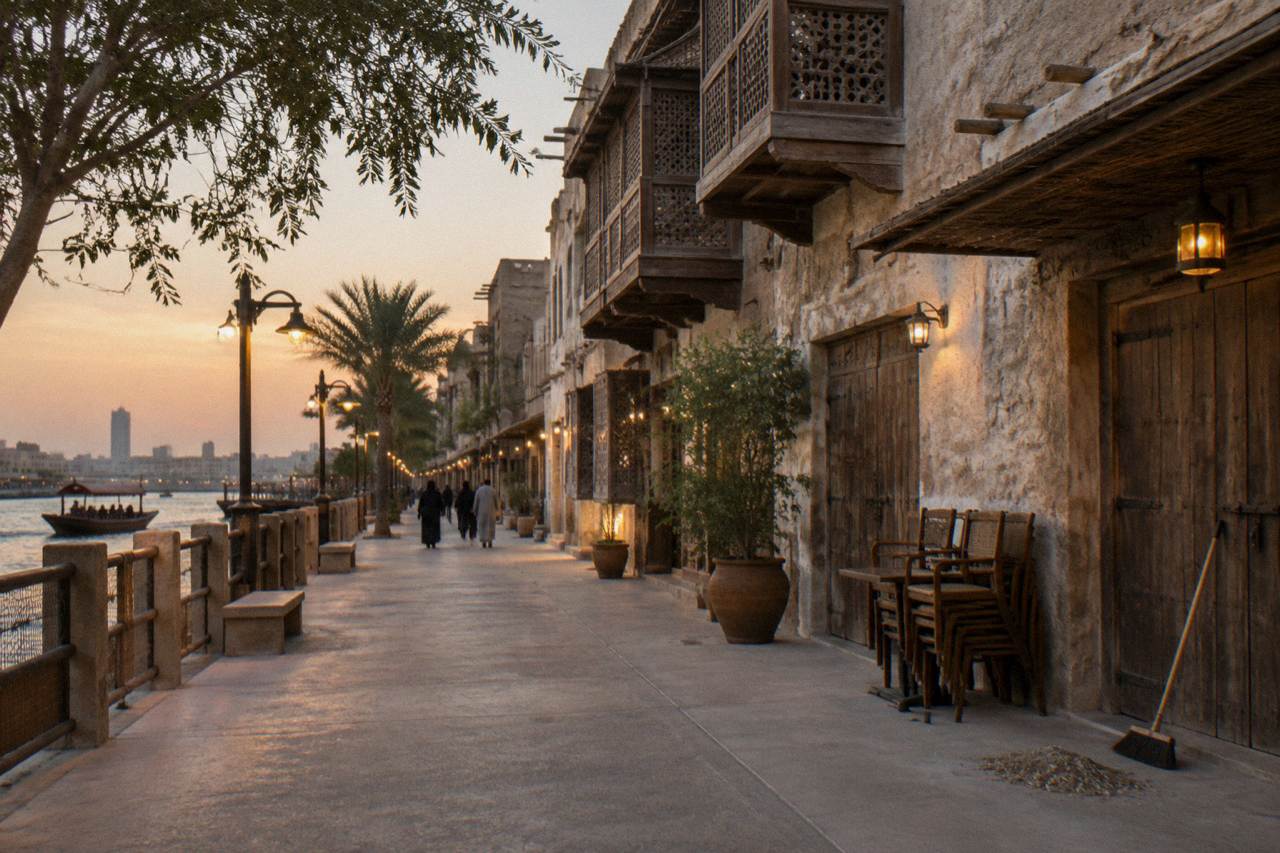
Ramadan in Dubai is a month in which official guidance, not rumour, should shape the plan. The UK Foreign Office's travel advice for the UAE says plainly what a visitor should expect: follow local dress codes, expect shops and restaurants to change their hours, and be aware that hotels and restaurants serving food or drink in fasting hours may screen you from Islamic guests. That is the whole of the official picture, and it is a manageable one. This page works through what that means in practice, using only what the verified records confirm: the expected 2027 dates, the dress and conduct rules, the free places that stay open, and the transport hours and fares that frame any visit.
What Changes In Dubai During Ramadan?
For most visitors it is still a workable trip, and the official guidance describes differences rather than discouragement: shops and restaurants change their hours, food and drink service during fasting hours may be screened off from Islamic guests, and dress codes apply more firmly than usual. Nothing in the official advice says to avoid Dubai in Ramadan. The changes touch mealtimes and opening hours far more than they touch the sights.
The UK Foreign Office's UAE travel advice is the clearest official statement of what changes. It asks visitors to follow local dress codes, to expect shops and restaurants to change hours, and to be aware that hotels and restaurants serving food or drink in fasting hours may screen you from Islamic guests. Screening means exactly what it says: service continues, but in a way that keeps it out of view of guests who are fasting. A visitor who is eating does not break any rule by eating; the arrangement is the venue's responsibility and it is standard practice across the country.
Two practical notes sit alongside that guidance and apply all year, Ramadan or not. Drinking or being drunk in a public place is illegal anywhere in the UAE, and the legal drinking age in Dubai is 21. Crossing the road anywhere other than a designated pedestrian crossing is also illegal and can bring a fine or imprisonment. Neither rule is created by Ramadan, but a month in which daily routines shift is a sensible moment to be precise about both.
Attraction timings shift too, and the verified records name two specific cases: the Dubai Frame and the abra crossing vary their timings during Ramadan (see Dubai Fountain Show). The records do not state the changed hours, so this page does not either; the right move is to check the operator's own pages before planning a visit around either. The Frame's standard admission is AED 50 for an adult and AED 20 for a child aged 3 to 12, with children under 3 free, and Zabeel Park around it charges its own AED 5 entry, so neither is a free visit at any time of year.
| What changes | What the official guidance and records say |
|---|---|
| Dress | Follow local dress codes; the same modesty rules apply, and Ramadan is a time to keep to them firmly |
| Shops and restaurants | Expect changed hours; the specific hours are set by each venue |
| Food and drink in fasting hours | Hotels and restaurants may screen you from Islamic guests while serving you |
| Alcohol | Illegal to drink or be drunk in public anywhere in the UAE; legal age 21 in Dubai; not a Ramadan-specific rule |
| Dubai Frame and abra | Timings vary in Ramadan; check the operator's pages, the standard hours are not published as unchanged |
One thing that does not change is the free walking tour scene. Thirteen free walking tours run in Old Dubai and Downtown, listed on GuruWalk and freetour.com, all free or pay what you want: you reserve a free spot and pay the guide what you think the walk was worth at the end. The amount is the walker's choice and no official figure exists. The walks concentrate in the old quarter, Al Seef, Al Fahidi and Bastakiya, with one walk meeting at the Dubai Mall, so a Ramadan visitor based anywhere in the city can reach one by Metro.
The three walks above are the strongest reviewed of the six most-reviewed walks on this site. Abdalla's walk, Discover ancient Dubai, its culture, and the souks, is rated 4.56 out of 5 across 265 English-language GuruWalk reviews and runs 2 hours and 45 minutes in English, German, Spanish and Italian, starting at Al Fahidi Marine Transport Station. Ameer's 7 Hidden Gems of Old Dubai walk is rated 4.85 out of 5 across 27 English-language GuruWalk reviews, runs 2 hours and 30 minutes in English and starts at KFC Al Seef. Taha's Discover the Hidden True Dubai YUPTOURS walk is rated 5 out of 5 across 27 English-language GuruWalk reviews, runs 2 hours and 45 minutes in English and German and starts at the Museum of Illusions, Al Seef.
When Does Ramadan Start In 2027?
Ramadan 2027 is expected to begin about 8 February 2027, by astronomical projection, and Eid Al Fitr is expected on 9 or 10 March 2027. The start is set by moon sighting, so neither date is confirmed until it is announced. A visitor planning around these dates should treat them as projections, book flexibly where possible, and expect the month to occupy roughly late winter and early spring in the Gulf calendar.
The astronomical projection comes from the UAE Astronomy Centre via media reports, and the moon sighting caveat is the part that matters. Islamic months begin when the new moon is sighted, and the announcement can move the start by a day either side of the projection. Anyone locking flights or hotel dates to the first day of Ramadan should build in that margin.
A Ramadan that begins in early February 2027 sits inside the cooler half of the Dubai year, and inside Global Village Season 31, which opens on 14 October 2026. Global Village is a paid seasonal park, its Season 31 ticket prices are not published, and its hours are Sunday to Wednesday 16:00 to midnight, Thursday to Saturday and public holidays 16:00 to 01:00, with Tuesdays except holidays reserved for families, couples and ladies. People of determination and a companion enter free. Those hours mean an evening visit, which suits a month in which evening is the active part of the day.
For a visitor weighing the timing, the honest framing is this: the dates are projections, the changes are real but bounded, and the free core of the city does not close for the month. The Free Things To Do In Dubai guide pages cover the fountain, the souks, the beaches and the old quarter in detail, and almost all of that remains walkable through Ramadan. What shifts is when things happen, not whether they happen.
The walks make a good anchor for a Ramadan itinerary because they are short, free and concentrated in one district. If the question is whether to build a trip around Old Dubai, the free walking tours in Dubai guide lays out all thirteen, including the walks that have gathered only a handful of reviews so far.
What Dress And Conduct Rules Apply?
Official guidance asks for modest dress in public places such as malls: women should cover shoulders and knees, underwear must not be visible, no transparent clothing and none carrying offensive imagery or phrases, and swimwear only on beaches and at pools. Public affection is frowned upon, kissing in public can lead to arrest, and swearing and rude gestures, including online, are illegal. Some venues and events set their own dress codes on top of these.
These rules come from the UK Foreign Office's travel advice for the UAE, and they apply year round, not only in Ramadan. The practical reading for a Ramadan visit is that the same standards are watched more closely, so the safest wardrobe is one that would pass in a mall on any day of the year: shoulders and knees covered, nothing transparent, nothing with slogans that could offend. Swimwear belongs on the beach or at the pool and nowhere else.
The conduct rules deserve the same precision. Showing affection in public is frowned upon and kissing in public can lead to arrest. Swearing and rude gestures are illegal, and that includes online behaviour, which matters in a month when social activity moves to the evenings and phones are constantly out. Drinking in a public place is illegal anywhere in the UAE, and drinking or possessing alcohol is illegal in Sharjah, which sits within easy reach of Dubai and is sometimes crossed on day trips.
For mosque visits there is one specific, verified rule: the Jumeirah Mosque is entered only on the paid guided visit run by the Sheikh Mohammed Centre for Cultural Understanding, at AED 45 per person, with visits at 10:00 and 14:00 daily except Friday, lasting about 1 hour 15 minutes, and modest dress is required. The mosque is not open to walk in, at Ramadan or any other time, so it is never a free stop on any itinerary.
None of this amounts to a reason not to visit. It amounts to a packing list and a set of habits. A visitor who follows the dress guidance, keeps affection private, drinks only in licensed venues and crosses roads at designated crossings is compliant with everything the official advice asks for, in Ramadan and out of it.
Which Free Places Stay Open?
The free core of Dubai stays free through Ramadan: Al Fahidi Historical Neighbourhood is free to walk within its posted hours, the souks are free to browse, Kite Beach and the other public beaches are free, and Al Seef's creekside promenade is free to walk. What a visitor should check is hours, not admission, because the month shifts schedules rather than closing places.
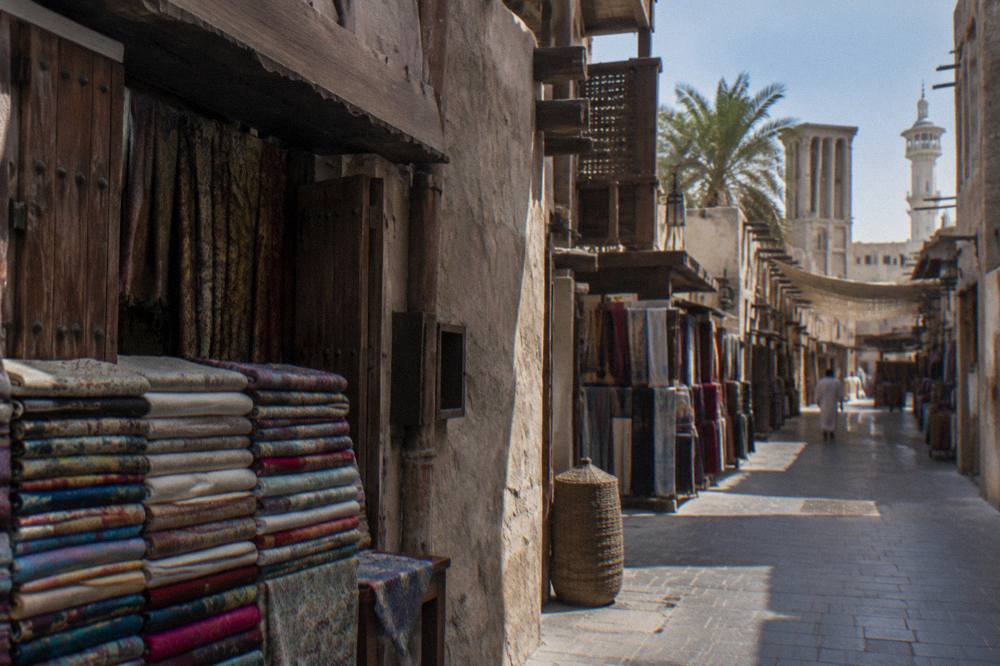
The verified records are specific about what is free and what is not, and the free list is long. Al Fahidi Historical Neighbourhood is free to walk at any time within the posted hours. The Gold Souk, Spice Souk and Textile Souk are free to walk and browse with no entrance fee. Al Seef is free to walk, with restaurants and shops as paid purchases. Al Shindagha district and its creekside walk are free, though the museum there is AED 50 for an adult. Kite Beach, JBR's The Beach, Jumeirah Public Beach and Sunset Beach are free public beaches, and swimming after dark is allowed only on designated floodlit, lifeguarded stretches.
| Place | Status in the verified records |
|---|---|
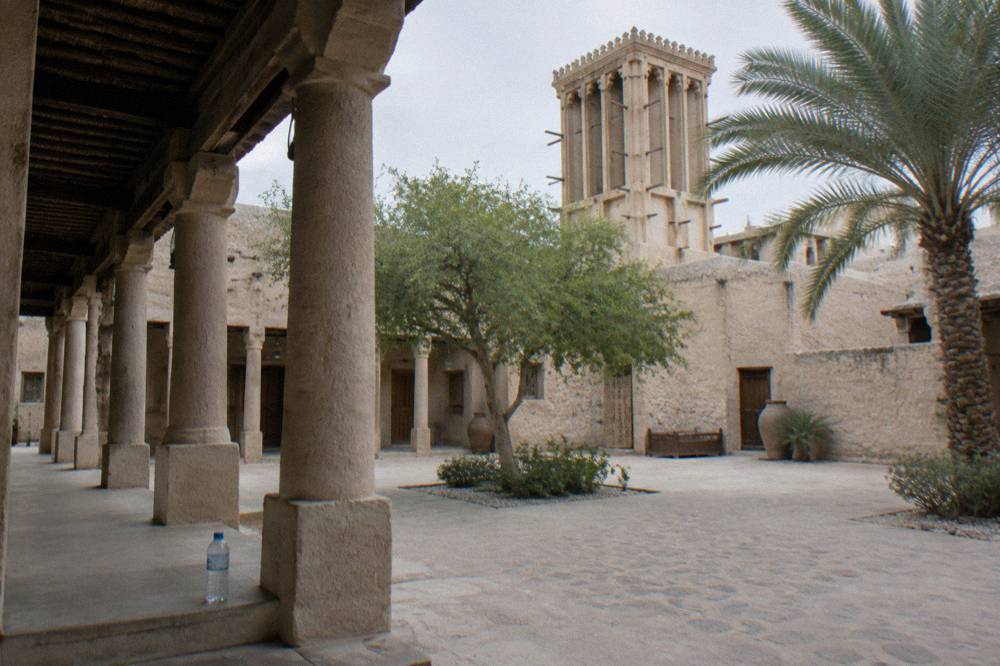
| Al Fahidi Historical Neighbourhood | Free to walk within posted hours |
| Gold, Spice and Textile Souks | Free to walk and browse, no entrance fee |
| Al Seef | Free to walk the promenade; food and shops are paid purchases |
| Kite Beach | Free public beach |
| Coffee Museum | Free entry; closed Fridays; the shop is a paid purchase |
| Jameel Arts Centre | Free, register at the welcome desk; opens 12:00 on Fridays, closed Tuesdays |
| Dubai Fountain | Free to watch from the public Burj Lake promenade and the Dubai Mall waterfront; the show was paused for 10 days from 21 September 2026 and resumption is unconfirmed |
| Museum of the Future | Closed to the public since the start of September 2026; set to reopen in the first quarter of 2027 |
| Dubai Museum, Al Fahidi Fort | Closed for restoration, outside viewing only |
| Dubai Frame | Paid: AED 50 adult, AED 20 child aged 3 to 12, free under 3; Zabeel Park entry is a separate AED 5 |
The fountain deserves its own sentence because it is the city's flagship free show and its status is genuinely conditional. The Dubai tourism authority's page for the fountain carries a notice that the show was suspended for 10 days from 21 September 2026, and whether it has resumed is not confirmed on the official fountain listing. When the show runs, the listed times are Saturday to Thursday 13:00 and 13:30, Friday 14:00 and 14:30, and evenings every 30 minutes from 18:00 to 23:00. The Lake Ride and the Boardwalk are paid, no price is printed here, and both were stated to stay open during the pause. Free viewing is from the public Burj Lake promenade and the Dubai Mall waterfront.
The walking tours slot into this picture neatly, because the old quarter is where the free walks and the free streets overlap. Taha's Discover the Hidden True Dubai YUPTOURS walk starts at the Museum of Illusions, Al Seef, and you can See this free tour on its GuruWalk page. It is rated 5 out of 5 across 27 English-language GuruWalk reviews, runs 2 hours and 45 minutes in English and German, and is free or pay what you want like every walk on this site's roster. The other platform, freetour.com, lists one more walk: the Two-Hour Old Dubai Walk led by junaid, a 2-hour English walk from the Arabian Tea House, Al Fahidi, rated 9.9 out of 10 across 12 freetour.com reviews on that platform's 10-point scale.
For evening plans, which matter more than usual in Ramadan, the what to do in Dubai at night for free page collects the after-dark options that cost nothing. The Dubai Water Canal walkways and the waterfall bridge are free to see, the Dubai Marina Walk is a free waterfront promenade, and Bluewaters Island's promenade and walkways are free to walk. The Pointe fountain is reported closed since May 2023, so no Palm fountain show exists anywhere; that is a permanent condition, not a Ramadan one.
What Do The Transport Hours Look Like?
Dubai Metro runs Monday to Thursday 05:00 to 24:00, Friday 05:00 to 01:00, Saturday 05:00 to 24:00 and Sunday 08:00 to 24:00, and nothing in public transport is free for visitors: a one-zone silver nol trip costs AED 3, two adjacent zones AED 5 and more than two zones AED 7.50. The Blue Line is not open.
The fare structure is worth knowing before the trip rather than after it. A silver nol card costs AED 25 including an AED 19 balance. The red ticket, a AED 2 paper card, charges AED 4 for one zone, AED 6 for two adjacent zones and AED 8.50 for more than two zones, so it costs more per trip than the silver card and suits short visits. The Roads and Transport Authority publishes the fares and the hours, and its pages are the source for every figure in this section.
| Ticket or trip | Cost |
|---|---|
| Silver nol, 1 zone | AED 3 |
| Silver nol, 2 adjacent zones | AED 5 |
| Silver nol, more than 2 zones | AED 7.50 |
| Red ticket, 1 zone | AED 4 |
| Red ticket, 2 adjacent zones | AED 6 |
| Red ticket, more than 2 zones | AED 8.50 |
| Red ticket paper card | AED 2 |
| Silver nol card | AED 25, including AED 19 balance |
| Abra commuter trip | AED 2; children under 5 and people of determination ride free |
| Electric Abra tour | AED 60 per 30 minutes per boat |
The Friday hours deserve attention in any Ramadan plan, because Friday is the day the schedules move most. The Metro runs until 01:00 on Fridays, the Coffee Museum is closed on Fridays, Jumeirah Mosque visits do not run on Fridays, and the Jameel Arts Centre opens at 12:00 on Fridays and is closed on Tuesdays. A visitor who plans a Friday around museum mornings will find them shut, while a visitor planning late-evening travel will find the Metro at its most generous.
The abra is the one crossing this site is often asked about, and the record is unambiguous: it is paid, AED 2 per commuter trip on the RTA routes, with children under 5 and people of determination riding free on commuter trips. The Electric Abra tour is a separate product at AED 60 per 30 minutes per boat. The current fare is AED 2 per commuter trip on the RTA routes across Dubai Creek. No guided walk on this site's roster includes the fare, and no source states who pays it on a walk, so budget the AED 2 yourself.
The one walk that leaves the old quarter is Alena's Dubai Mall, Burj Khalifa and Downtown walk, a 2-hour English walk meeting at the Dubai Mall, listed on GuruWalk with no published rating. Downtown's free layer is real: entering and walking the Dubai Mall is free, the aquarium's large viewing panel facing the mall corridor can be looked at without a ticket, and the waterfall inside the mall is free to look at. Every observation deck is paid and no price is printed here because the official figure is unresolved.
Put together, the transport picture for a Ramadan visit is simple. Buy a silver nol card on arrival, expect the Friday schedule to differ from every other day, keep AED 2 in mind for the abra, and check the Frame and abra pages for the month's varied timings. The Metro's hours, the fares and the closed Blue Line are the whole of the verified transport story.
Common Questions About Visiting Dubai During Ramadan
Is It A Good Idea To Visit Dubai During Ramadan?
For most visitors, yes, with adjustments. Official UK travel advice asks visitors to follow local dress codes, expect shops and restaurants to change hours, and expect food service in fasting hours to be screened from Islamic guests. The free core of the city, the souks, the old quarter, the public beaches and the creekside promenades, stays free and open within posted hours, and the free walking tours continue to run in Old Dubai and Downtown.
When Does Ramadan Start In 2027?
Ramadan 2027 is expected to begin about 8 February 2027 by astronomical projection, with Eid Al Fitr expected on 9 or 10 March 2027. The start is set by moon sighting, so the dates are not confirmed until announced, and plans should carry a day of margin either side.
What Dress And Conduct Rules Apply?
Official guidance asks for modest dress in public places such as malls: cover shoulders and knees, no visible underwear, no transparent clothing and none with offensive imagery or phrases, and swimwear only on beaches and at pools. Public affection is frowned upon, kissing in public can lead to arrest, and swearing and rude gestures, including online, are illegal. Drinking in public is illegal anywhere in the UAE.
Which Free Places Stay Open?
Al Fahidi Historical Neighbourhood, the Gold, Spice and Textile Souks, Al Seef, Al Shindagha district, Kite Beach and the other public beaches, Alserkal Avenue and the Jameel Arts Centre all remain free within their posted hours. The Coffee Museum is free but closed on Fridays. The Museum of the Future is closed to the public and set to reopen in the first quarter of 2027, and Dubai Museum in Al Fahidi Fort is closed for restoration.
What Do The Transport Hours Look Like?
The Metro runs Monday to Thursday 05:00 to 24:00, Friday 05:00 to 01:00, Saturday 05:00 to 24:00 and Sunday 08:00 to 24:00. A one-zone silver nol trip costs AED 3, the abra crossing is AED 2 per commuter trip, and nothing in Dubai public transport is free for visitors. The Blue Line is not open.
Are The Free Walking Tours Still Free During Ramadan?
Every walk on this site's roster is free or pay what you want: you reserve a free spot and pay the guide what you think the walk was worth at the end. Thirteen walks run in Old Dubai and Downtown, listed on GuruWalk and freetour.com. No source states any Ramadan-specific change to the walks, and no official tip figure exists.