Is Dubai Expensive For Tourists?
A figures-only answer to whether Dubai is expensive for tourists: transport fares, entry fees, the free layer, and how pay-what-you-want walking tours change the maths.
Is Dubai Expensive For Tourists?
Dubai is expensive only in specific places, and the verified figures show exactly where. Nothing in public transport is free, but a single-zone Metro trip costs AED 3 on a silver nol card. The headline attractions that charge, the Dubai Frame at AED 50 and Al Shindagha Museum at AED 50, sit beside a free layer of beaches, heritage districts and souks that costs nothing to enter.
The honest answer is that Dubai is a city of two price layers, and which one you experience depends almost entirely on choices made before you arrive. The paid layer is concentrated and easy to name: observation decks, museum tickets, seasonal parks and boat rides. The free layer is larger than most first-time visitors expect, and it includes some of the places the city is famous for, including the public beaches, the old heritage districts and the souks.
What this page does is stick to the records. Every fare and fee below comes from the operators' own pages and official Dubai transport sources. Where a figure is not confirmed, this page says so plainly rather than filling the gap with a plausible number. There are no hotel prices, no food prices and no shopping budgets here, because no verified record for those exists on this site, and an invented figure would be worse than none.
The single biggest lever on a Dubai budget is not where you sleep or eat, it is how much of the paid layer you choose to enter. A tourist who walks the Al Fahidi Historical Neighbourhood, swims at Kite Beach and watches the Dubai Fountain from the public promenade spends nothing on attractions at all. A tourist who buys every deck, tunnel and pavilion ticket spends heavily. Both are real versions of Dubai.
For the full picture of the no-spend version of the city, the companion guide on Free Things To Do In Dubai covers the free layer district by district, and the guide to spending a day without money goes deeper on the zero-dirham itinerary.
One structural point worth making early: the old quarter is where the free layer is densest. Thirteen free walking tours run in Old Dubai and Downtown, listed on GuruWalk and freetour.com, all free to reserve with a payment to the guide at the end chosen by the walker. That is a paid-layer experience, a guided walk with a local, available at a price you set yourself, and it reshapes the whole cost question. The three walks below are the ones with the strongest English-language review figures on GuruWalk.
What Does Getting Around Cost?
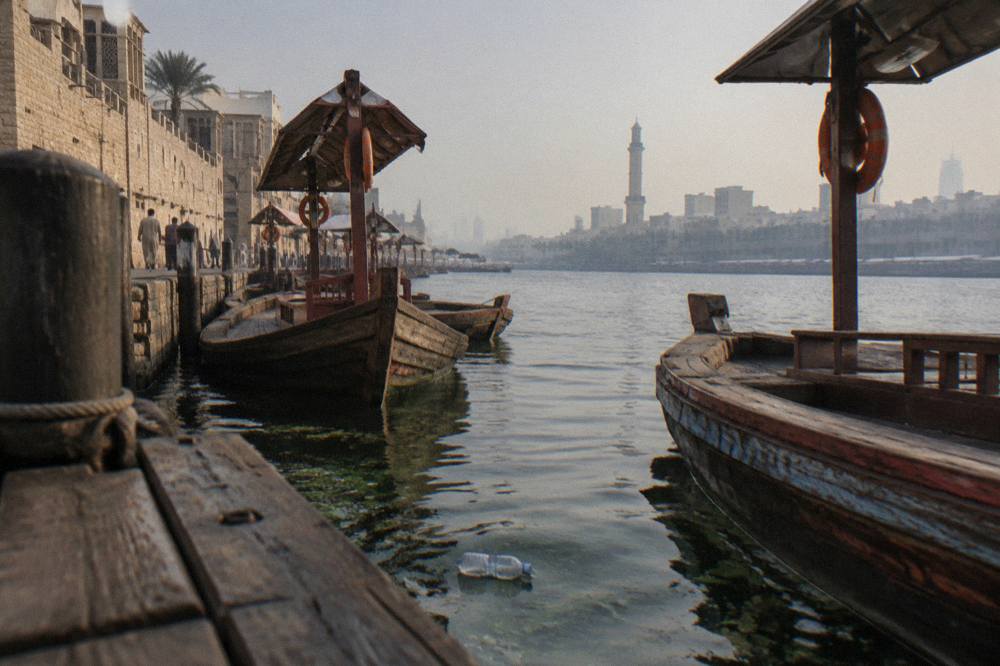
Getting around Dubai is cheap in absolute terms but never free: a one-zone Metro trip is AED 3 on a silver nol card, two adjacent zones are AED 5, and more than two zones are AED 7.50. The creek abra crossing is AED 2 per commuter trip. Children under 5 and people of determination ride the abra free on commuter trips, and nothing in the city's public transport is free for other visitors.
The fare structure is zone-based and published by the RTA, the roads and transport authority, on its own pages at rta.ae. A silver nol card, the standard stored-value card, costs AED 25 and includes AED 19 of balance, so the card itself represents AED 6 of the price. A red ticket, the AED 2 paper card aimed at occasional riders, charges slightly higher fares: AED 4 for one zone, AED 6 for two adjacent zones and AED 8.50 for more than two zones.
For longer stays there are 7-day silver passes: AED 50 for one zone, AED 80 for two zones and AED 110 for all zones. Whether a pass beats pay-as-you-go depends on trip count, and the arithmetic is simple enough to do on the back of a boarding pass: a one-zone commuter making ten trips a week pays AED 30 in fares, against AED 50 for the pass.
| Transport item | Cost | Notes |
|---|---|---|
| Metro, 1 zone, silver nol | AED 3 | Per trip |
| Metro, 2 adjacent zones, silver nol | AED 5 | Per trip |
| Metro, more than 2 zones, silver nol | AED 7.50 | Per trip |
| Metro, 1 zone, red ticket | AED 4 | AED 2 paper card |
| Metro, 2 adjacent zones, red ticket | AED 6 | Per trip |
| Metro, more than 2 zones, red ticket | AED 8.50 | Per trip |
| Silver nol card | AED 25 | Includes AED 19 balance |
| 7-day silver pass, 1 zone | AED 50 | Unlimited in zone |
| 7-day silver pass, 2 zones | AED 80 | Unlimited in zones |
| 7-day silver pass, all zones | AED 110 | Unlimited citywide |
| Abra commuter crossing | AED 2 | Per trip, per person |
| Electric Abra tour | AED 60 | Per 30 minutes, per boat |
Metro hours matter for evening plans. Trains run Monday to Thursday from 05:00 to 24:00, Friday from 05:00 to 01:00, Saturday from 05:00 to 24:00 and Sunday from 08:00 to 24:00. The Blue Line is not open, so any route that assumes it will disappoint. The nol card also does double duty at park gates: Mushrif Park accepts nol only, at AED 3 entry, which is worth knowing before you stand at that particular turnstile.
The abra deserves its own sentence because it is the one old-city crossing people assume is free. It is not. The commuter crossing is AED 2 per person per trip, confirmed on the RTA's own pages for the routes across Dubai Creek, including the run between Deira and Bur Dubai. The Electric Abra tour is a different product entirely at AED 60 per 30 minutes per boat.
Set against those numbers, walking is the genuinely free mode, and the old quarter is where it pays off most. The distances between the heritage districts, the souks and the creek crossings are the reason the guided-walk format exists there at all, which is one reason the free-walks question is worth its own section further down this page.
Which Entry Fees Add Up?
The entry fees that add up are the headline ones: the Dubai Frame is AED 50 for an adult and AED 20 for a child aged 3 to 12, Al Shindagha Museum is AED 50, the Etihad Museum is AED 25, and the Jumeirah Mosque guided visit is AED 45 per person. Zabeel Park charges its own AED 5 on top of the Frame fee, and the two figures do not combine into one ticket.
The Frame and the park around it are the clearest example of why this page refuses to merge fees. The Frame is inside Zabeel Park, the park charges AED 5 per person with children under 2 free, and the Frame charges its own AED 50 and AED 20 on top. A visitor who budgets only the Frame price arrives AED 5 per person short. The Frame's own pages at dubaiframe.ae carry the current figures.
The museum layer splits by operator. Dubai Culture runs the Etihad Museum at AED 25 and Al Shindagha Museum at AED 50 for an adult, while the Al Fahidi Historical Neighbourhood and the Coffee Museum in the same heritage quarter are free, the Coffee Museum closed on Fridays with its ground-floor shop a paid purchase. Dubai Museum in Al Fahidi Fort is closed for restoration with no official reopening date, so no ticket exists to buy there at present.
The Jumeirah Mosque is the fee visitors most often get wrong. It is not open to walk in; a visit is only possible on the guided visit run by the Sheikh Mohammed Centre for Cultural Understanding, at AED 45 per person, running at 10:00 and 14:00 daily except Friday and lasting about 1 hour 15 minutes, with modest dress required. That is a paid programme, not an entry fee to a building, and the distinction matters when you are adding up a day.
| Attraction | Adult fee | Other fees | Free element |
|---|---|---|---|
| Dubai Frame | AED 50 | Child 3 to 12 AED 20, under 3 free | None, plus Zabeel Park AED 5 |
| Zabeel Park | AED 5 | Under 2 free | None |
| Al Shindagha Museum | AED 50 | District and creekside walk free | The district outside |
| Etihad Museum | AED 25 | None stated | None |
| Jumeirah Mosque visit | AED 45 | Not on Fridays, about 1h15 | None, not open to walk in |
| Creek Park | AED 5 | Cable car and attractions extra | None |
| Mushrif Park | AED 3 | Nol card only | None |
| Safa Park | AED 3 | None stated | None |
| Al Mamzar Beach Park | AED 5 | Child over 2 AED 5, per car AED 30 | Corniche strip outside the gate |
| Global Village | Not published | Season 31 opens 14 October 2026 | People of determination and a companion |
The seasonal parks are paid and, in one case, unpriced in the records. Global Village Season 31 opens on 14 October 2026 with hours of 16:00 to midnight Sunday to Wednesday and 16:00 to 01:00 Thursday to Saturday and on public holidays, Tuesdays except holidays reserved for families, couples and ladies, and people of determination entering free with a companion. Its Season 31 ticket prices are not published, so this page prints no figure, and the official page gives both May 2027 and October to April as the season end, so the closing date is contested and neither is stated here as settled. Dubai Miracle Garden and Dubai Garden Glow are also paid seasonal attractions, and no Miracle Garden price is printed here.
One way to spend less on this layer is to let a guided walk carry the old quarter. The 7 Hidden Gems of Old Dubai walk led by Ameer covers the old district in one free, pay-what-you-want outing, and the link below goes straight to the guide's GuruWalk page.
What Costs Nothing At All?
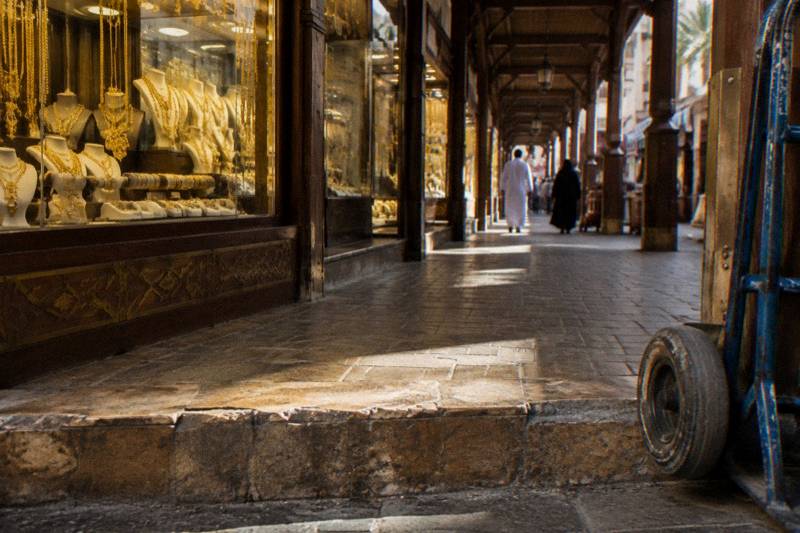
A large layer of Dubai costs nothing at all: Kite Beach, Jumeirah Public Beach, Sunset Beach and the JBR beach are free public beaches, the Al Fahidi Historical Neighbourhood is free to walk within posted hours, the Gold, Spice and Textile Souks are free to browse, and the Dubai Mall, the Burj Khalifa plazas and the aquarium viewing panel are free to look at.
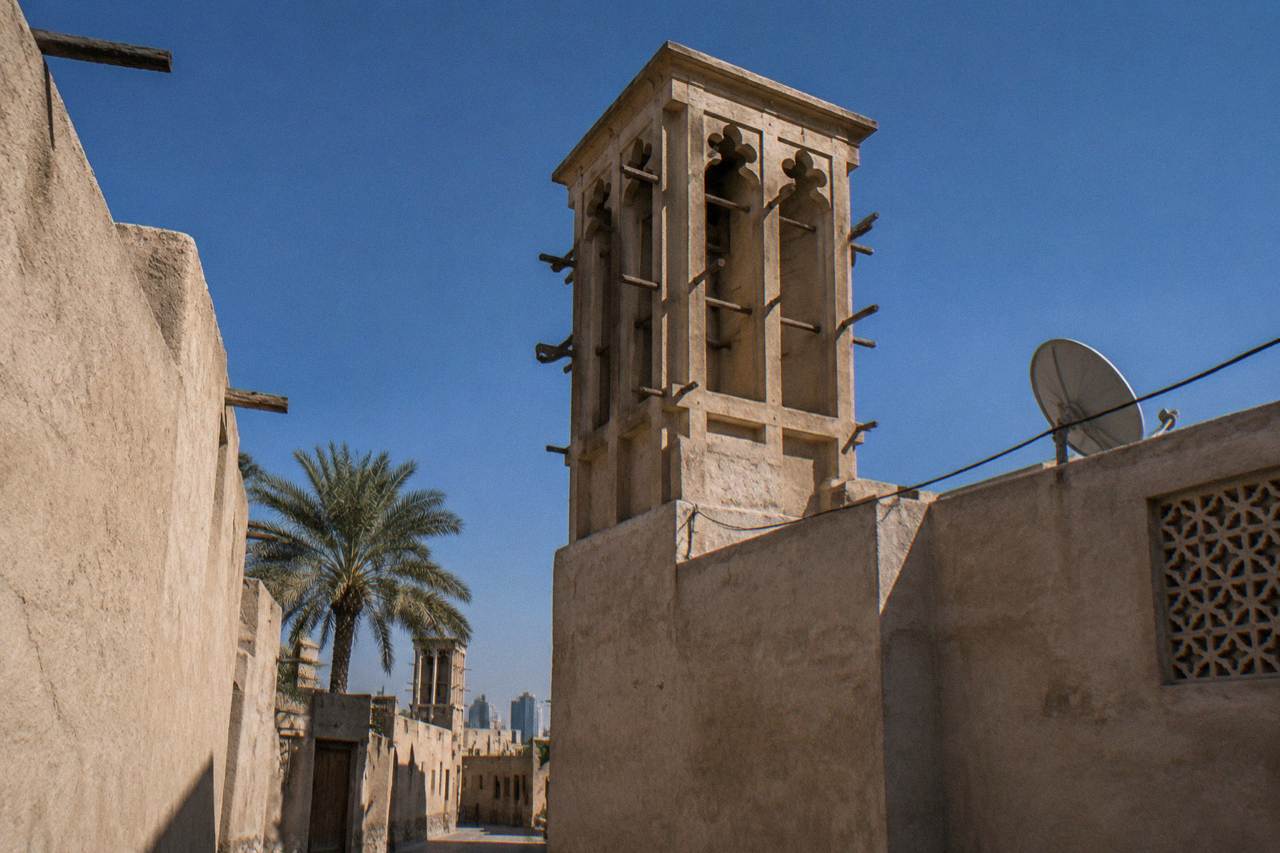
The free layer is not a set of second-tier leftovers. It includes the heritage heart of the city, the Al Fahidi Historical Neighbourhood, free to walk at any time within posted hours, and the Al Seef and Al Shindagha districts with their creekside walks, free to enter with restaurants and shops as paid purchases. The souks, the Gold Souk, the Spice Souk and the Textile Souk, are free to walk and browse with no entrance fee, and the Old Souk beside the creek crossing is part of the same free layer.
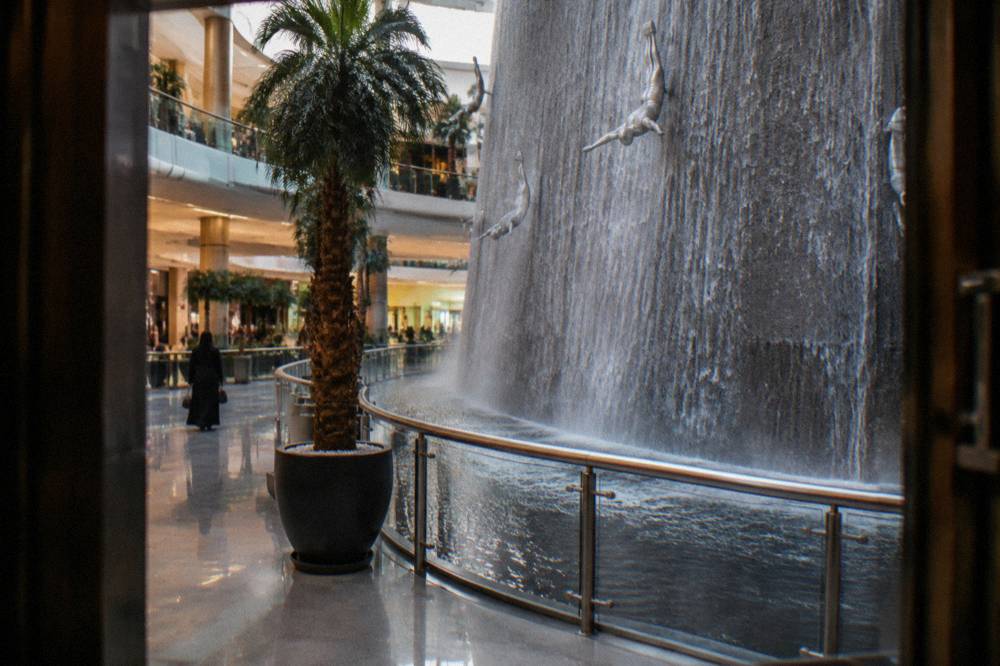
Downtown's free layer is built around looking rather than entering. The Dubai Mall is free to enter and walk, the waterfall inside is free to look at, and the large aquarium viewing panel facing the mall corridor can be seen without a ticket, while the tunnel walk and underwater zoo beyond it are paid with no price printed here. The Burj Khalifa itself and the public plazas and promenade around it cost nothing to look at, while every observation deck is paid and no deck price is printed anywhere on this site because the official figure is unresolved.
The fountain carries a caveat that matters. The show is free to watch from the public Burj Lake promenade and the Dubai Mall waterfront, but the Dubai tourism authority's page for the fountain carries a notice that the show was suspended for 10 days from 21 September 2026, and whether it has resumed is not confirmed on the official fountain listing. The Lake Ride and the Boardwalk are paid, no figure printed, and were stated to stay open during the pause. When the show runs, the listed times are Saturday to Thursday 13:00 and 13:30, Friday 14:00 and 14:30, and evenings every 30 minutes from 18:00 to 23:00.
Beyond the centre, the free list runs long. The Dubai Marina Walk, The Walk at JBR, Bluewaters Island's promenade and walkways, the Palm Jumeirah boardwalk along the trunk, the Dubai Water Canal walkways and the waterfall bridge, City Walk, Riverland's walk-in entry with rides paid, Expo City's Al Wasl Plaza and public district with Terra and other pavilions paid, Quranic Park's entry with its Glass House and cave paid, Alserkal Avenue and its galleries, and the Jameel Arts Centre, free for all with registration at the welcome desk, opening at 12:00 on Fridays and closed Tuesdays. Ras Al Khor Wildlife Sanctuary's hides are free per the Dubai Municipality page, with winter hours 07:30 to 17:30 and summer 06:00 to 18:00, 15 people at a time and no phones, food, drink or smoking inside. Al Qudra Lakes are free, in the desert about 40 minutes from the city, with designated picnic areas only. Hatta Dam and town are reported free while the kayak and wadi activities are paid.
Two cautions keep this list honest. Swimming after dark is allowed only on designated floodlit, lifeguarded stretches, never on any beach. And the Al Mamzar corniche strip outside the paid park is free with no gate, while the park behind it charges, so the same stretch of coast contains both a free record and a paid one. For a fuller district-by-district version, the guide to a budget day across Dubai and the post on what to do in Dubai with no money expand this layer in detail.
How Do Free Walking Tours Change The Maths?
Free walking tours change the maths by turning the most expensive category, a local guide, into a pay-what-you-want line item. Thirteen free walking tours run in Old Dubai and Downtown, listed on GuruWalk and freetour.com. You reserve a free spot, you pay the guide what you think the walk was worth at the end, the amount is the walker's choice, and no official figure for a typical payment exists in any source.
The format is simple and the price structure is genuinely as described. GuruWalk lists twelve of these walks in English, and the other platform, freetour.com, lists one more. None of them charges a booking fee or a fixed price, and this site prints no money figure against any walk, because the real price is the amount you decide at the end.
The review figures separate the established walks from the new ones, and the numbers are worth reading numerically rather than as adjectives. The Discover ancient Dubai walk led by Abdalla, starting at Al Fahidi Marine Transport Station, is rated 4.56 out of 5 across 265 English-language GuruWalk reviews, the largest review pool on the roster by a wide margin. The Step Back in Time walk led by Zeeshan from the Al Seef Heritage Hotel holds 5 out of 5 across 44 reviews. The YUPTOURS Hidden Dubai walk led by Taha from the Museum of Illusions, Al Seef, holds 5 out of 5 across 27. The 7 Hidden Gems of Old Dubai walk led by Ameer from KFC Al Seef is rated 4.85 out of 5 across 27, and the Streets of Old Dubai walk led by Muhammed from Wokyo Noodle Bar, Al Seef, holds 4.65 out of 5 across 20 and runs 3 hours in English and Spanish.
A small pool is a small pool, and that is all it is. A 5 out of 5 from 27 reviews is a strong score from twenty-seven people, not a guarantee, and the walks with no published rating are simply walks whose pages carry no rating figure, which this site reports as a blank rather than dressing it up. The freetour.com walk, the Old Dubai Walking Tour led by junaid from the Arabian Tea House, Al Fahidi, is rated 9.9 out of 10 across 12 freetour.com reviews on that platform's own 10-point scale, and the scale is printed with the figure because converting it to a 5-point score would be an invention.
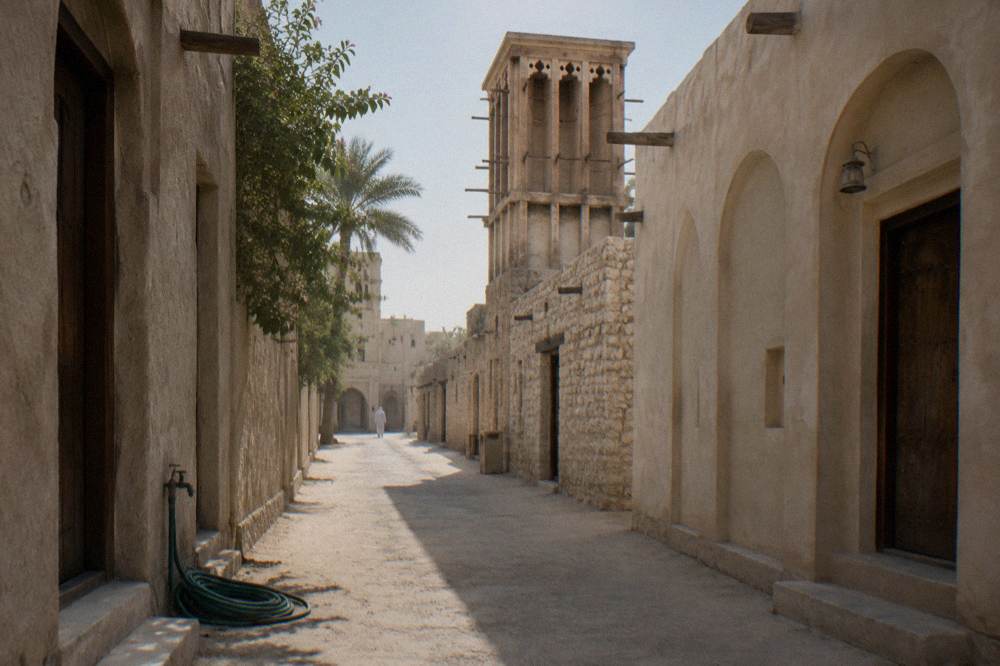
What the walks cannot do is cover the paid layer. No walk covers Downtown's paid decks, the Marina, the beaches or any museum or park; the guided walks on offer run in the old quarter, with one walk meeting at the Dubai Mall for Downtown. If the Burj Khalifa deck or the Frame is on your list, that is a ticketed item and a walk does not change it.
The budget effect is real nonetheless. A visitor who takes one guided walk of the old quarter, walks the free districts and souks afterwards, and spends the evening at the free promenade has bought a guided experience for a self-set amount and nothing else. The walk below is the one this article features, and you can See this free tour on its own page, or compare it with the two other strongest review pools via the full guide to free walking tours on GuruWalk.
So, is Dubai expensive for tourists? The records say it is as expensive as the ticketed layer you choose to enter, and no more. The fares are a few dirhams, the fees are concentrated and listed above, and the free layer, beaches, heritage districts, souks, promenades and pay-what-you-want walks, is wide enough to fill days. The three walks below are the strongest-reviewed places to start.
Common Questions About Dubai Costs
Is Dubai Expensive For Tourists?
Only in specific places. Transport costs AED 3 to AED 7.50 per Metro trip, headline attractions charge AED 25 to AED 50 entry, and a large free layer of beaches, heritage districts, souks and promenades costs nothing. The total depends on how much of the paid layer you choose to enter.
What Does Getting Around Cost?
A one-zone Metro trip is AED 3 on a silver nol card, two adjacent zones AED 5, more than two zones AED 7.50. The red paper ticket charges AED 4, 6 and 8.50. The abra crossing is AED 2 per commuter trip, and nothing in Dubai public transport is free for visitors.
Which Entry Fees Add Up?
Dubai Frame AED 50 adult and AED 20 child plus Zabeel Park AED 5, Al Shindagha Museum AED 50, Etihad Museum AED 25, Jumeirah Mosque guided visit AED 45, and the municipality parks at AED 3 to AED 5. Global Village Season 31 prices are not published, so no figure is printed.
What Costs Nothing At All?
The public beaches including Kite Beach and JBR, the Al Fahidi Historical Neighbourhood, the souks, Al Seef and Al Shindagha districts, the Dubai Mall and its waterfall, the aquarium viewing panel, the Burj Khalifa plazas, the Marina and canal walkways, Alserkal Avenue and the Jameel Arts Centre.
Are Free Walking Tours Actually Free?
They are free to reserve and pay what you want at the end. Thirteen run in Old Dubai and Downtown, listed on GuruWalk and freetour.com. The amount paid to the guide is the walker's own choice, and no official figure for a typical payment exists in any source.